Customs Today
  • Home
  • Islamabad
  • Karachi
  • Lahore
  • National
  • Transfers and Postings
  • Chambers & Associations
  • Business
No Result
View All Result
Customs Today
  • Home
  • Islamabad
  • Karachi
  • Lahore
  • National
  • Transfers and Postings
  • Chambers & Associations
  • Business
No Result
View All Result
Customs Today
No Result
View All Result
Home Science & Technology Science

Researchers say Neptune-like exoplanets can evolve into habitable planets

byCustoms Today Report
05/02/2015
in Science, Science & Technology
Share on FacebookShare on Twitter

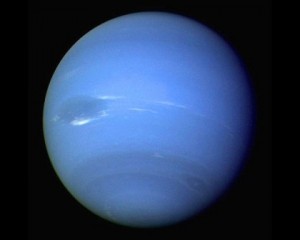
LONDON: A recent study has revealed that Neptune-like Exoplanets have the potential to evolve into Earth-like planets. The research was done by the University of Washington (UW) doctoral student Rodrigo Luger and research assistant professor Rory Barnes. It was published in a journal named Astrobiology

According to the study, the transformation of these planets, which are similar to Neptune, depends on their host stars, the Voice Chronicle reported.


You might also like

Tesla driverless system to use updated radar technology

12/09/2016

Apple to develop its own self-driving technology

10/09/2016

Exoplanets are defined as planets that have relatively the same size as Earth. However, unlike Earth, these alien planets do not orbit around a sun. Instead, they are located near a star.

These stars, labeled as M dwarfs, are not as bright as the sun.

The study’s co-authors, assistant professor Rory Barnes and doctoral student Rodrigo Luger explained that the habitability of an exoplanet depends on its distance from the host star and on two important factors.

“There are many processes that are negligible on Earth but can affect the habitability of M dwarf planets,” Luger said in a statement. “Two important ones are strong tidal effects and vigorous stellar activity.”

Luger then said that the contrasting forces produced by these two factors on the exoplanet could eventually change its environmental conditions. For instance, these forces could reduce a planet’s temperature and prevent water from boiling away.

In addition, the study’s co-author noted that exoplanets can deviate from their current orbit path to move closer to another planet that’s circling the same host star. By getting close to one another, exoplanets with frozen surfaces can generate warmth from one another.

Through this process, ice in the exoplanets will melt which will lead to the formation of life-sustaining liquid water, according to Perfect Science.


Related Stories

Tesla driverless system to use updated radar technology

byCT Report
12/09/2016

WASHINGTON: Electric carmaker Tesla announced Sunday it was upgrading its Autopilot software to use more advanced radar technology. In a...

Apple to develop its own self-driving technology

byCT Report
10/09/2016

SAN FRANCISCO: Apple may not become an automaker, but it still wants to develop its own self-driving technology. The iPhone-maker's...

NASA spots slowest known magnetar

byCT Report
10/09/2016

WASHINGTON: Astronomers have found evidence of a magnetar - magnetised neutron star - that spins much slower than the slowest...

‘YouTubers’ outshining old-school television

byCT Report
09/08/2016

SAN FRANCISCO: A media revolution is taking place, and most people over 35 years of age aren’t tuned in. Millennial...

Next Post

South Korean won surges over 1% against US dollar

  • Terms and Conditions
  • Disclaimer

© 2011 Customs Today -World's first newspaper on customs. Customs Today.

No Result
View All Result
  • Transfers and Postings
  • Latest News
  • Karachi
  • Islamabad
  • Lahore
  • National
  • Chambers & Associations
  • Business
  • About Us

© 2011 Customs Today -World's first newspaper on customs. Customs Today.