LONDON: The Port of Olympia Commission on Monday took one more look at the port’s financial performance in 2015, but the picture was unchanged: Revenue fell sharply last year due to a drop in world oil prices, which halted the need to import a product called ceramic proppants.
Importing proppants, also known as fracking sand, had been brisk business until oil prices fell. Once prices bottomed out, demand for fracking sand in the North Dakota oil patch came to a stop. The last delivery of fracking sand to the port was in January 2015.
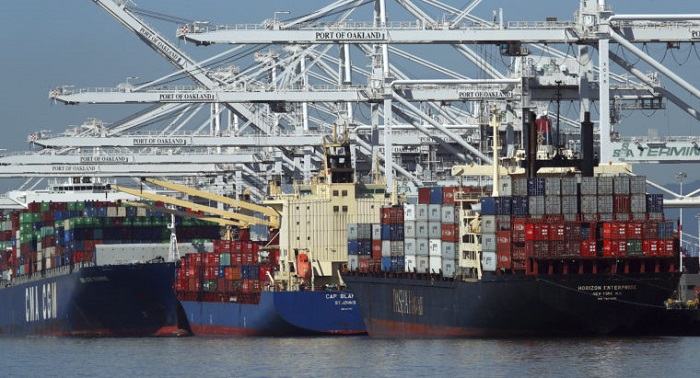

The result was that operating revenue at the port last year, which was projected to be $14.8 million, slumped to $9.7 million. The marine terminal, typically the biggest revenue driver at the port, saw its share of revenue, once projected to be $8.3 million, fall to $3.3 million, finance director Jeff Smith told the commission Monday night.
“World market prices for oil declined dramatically,” Smith said. Include depreciation — a non-cash term to describe the decline in value of an asset of over time — and the port showed an operating income loss of $2.2 million. But after you add about $5 million in property taxes collected by the port, it showed net income of $510,000. Still, that was $2.4 million less than planned.
But Smith reminded the commission that the port reacted to the revenue slowdown by deferring $13.2 million in capital investments. That left the port with a capital investment balance of $12.5 million. But even of that total, the port spent only $8.5 million, he said. The port also has decided to leave two staff positions unfilled. And despite the downturn, the port still has a contract in place with Rainbow Ceramics, the exporter of fracking sand, Smith said.
After Smith’s presentation, Commissioner Joe Downing acknowledged that “not all of those slides were pretty.” Still, Downing found some positives, one of which was the port’s other divisions — Swantown Marina, Olympia Regional Airport and the real estate division remain stable.
The state of commercial real estate in the county also has improved, so it might be an “opportune time to do something with the New Market Industrial Campus,” Downing said. Commissioner E.J. Zita zeroed in on a financial measurement known as “return on revenue.” The port’s goal is a 5 percent return on revenue, but finance director Smith acknowledged that the port has never hit that target.
For 2015, the return on revenue at the port was a negative 23 percent. “What is the biggest reason that we are falling short of this goal?” Commissioner Zita asked Smith.
Before Smith could answer, Downing took a stab at an answer. “Remember the port is a public-private entity,” he said. “A lot of things we do are for the public, and we also attempt to get a return on investment. We don’t run the port exactly like a business or exactly like a government.” Commissioner Zita said she understands that providing community services is part of the port’s mission. She wondered whether there was an accounting standard that would better reflect the port’s community service goals in the budget.