LONDON: The predictions only get worse. In 2007, a United Nations panel of scientists studying the rise of sea level related to climate change predicted that, if nothing was done to reduce greenhouse gas emissions, seas could rise by about 0.6m by 2100.
By 2013, the panel had increased its forecast to more than 1m, which would put major cities at risk of flooding and storm surge.
Yet all along, the panel emphasised what it did not know. It expressed particular uncertainty about what could happen to the ice sheet in Antarctica. To help fill in the gaps, it invited outside scientists to contribute their own research.
Now the outside research is bearing fruit – and the news is not good. A new study published in the journal Nature painted perhaps the most ominous picture yet.
It showed that, by the end of this century, sea levels could rise 2m or more – again, if nothing is done to reduce emissions – potentially inundating many coastal areas, submerging nations and remaking maps of the world.
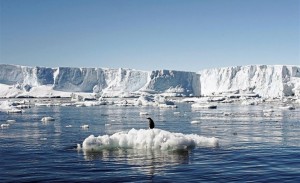
The study focused on one of the most elusive aspects of sea level science: What will happen to the West Antarctic ice sheet? Scientists have long believed the ice sheet would melt from climate change and contribute to higher sea levels. But they believed that the melting, and rising sea levels it would cause, could occur over many hundreds or even thousands of years.
The new study by Robert DeConto, a geoscientist at University of Massachusetts, and David Pollard, a geoscientist at Pennsylvania State University, based its finding on models it developed from studying ancient sea level and temperature changes. The scientists found that drastic sea level rise could happen within a lifetime.
Benjamin Horton, a coastal geologist at Rutgers University who studies sea level, said it did not surprise many people in his field.
In 2013, Horton led a survey of almost 100 sea level scientists that concluded that sea levels could rise almost 1.2m by 2100 – higher than the United Nations panel’s worst scenario. But within that group, 13 scientists said there was a 17% chance that sea levels would rise by 1.98m, a figure in line with the study.
Predicting changes involves measuring and modelling several different factors that then have to be blended together, Horton said. Those elements include an increase in volume from expansion caused by warming water, the melting of glaciers in places such as Alaska, and the melting of ice sheets in places such as Greenland and Antarctica.
Satellite technology and imagery had made it easier to understand what is happening above and below the West Antarctic ice sheet, Horton said. “They’re heated at the surface from air temperature and they’re heated at the base from ocean temperatures. They retreat and then they become unstable and they retreat even further. They have all these feedback mechanisms that keep on making the situation worse.”
The process involves what is known as cliff collapse. “Ponds of meltwater that form on the ice surface often drain through cracks,” the article said. “This can set off a chain reaction that breaks up ice shelves and causes newly exposed ice cliffs to collapse under their own weight.”
Horton said the Greenland ice sheet contains enough ice to raise sea levels 6m, if they completely melted. Antarctica holds much more ice, enough to raise sea levels by 65m. But this extreme scenario could happen only over thousands of years.
What can be done? Even as the study predicted potential catastrophe, it also emphasised that the West Antarctic ice sheet probably would cause little change in sea level if temperature increases can be held under 2°C. That is a central goal of the climate agreement reached in Paris in December, though it is far from clear that countries will achieve it.
The obvious solution, Horton said, is to move quickly away from burning fossil fuels that contribute to climate change and rapidly expand solar, wind and other renewable forms of energy.
“We have a choice right now,” he said. “If we strongly mitigate against greenhouse gases, we can keep the sea level rise to a manageable level. These papers are not all doom and gloom. They are providing a warning and we as a scientific community are trying to stress the urgency on climate change. This is a dire warning, a dire prediction, but we can do something about it.”