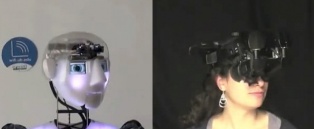


LONDON: A robot that can be controlled with your thoughts and brain signals has been developed, says new research. The robot is developed by researchers at the Swiss Federal Institute of Technology (EPFL), Switzerland.
The robot can be controlled remotely through brain signals and can perform various tasks. The team of researchers, headed by Professor Jose del R. Millain, particularly had disabled people in mind while working on the concept to restore a sense of independence to the disabled.
Nine disabled people and 10 healthy people in Italy, Germany and Switzerland took part in the task of piloting a robot with their thoughts. For several weeks, each of the subjects put on an electrode-studded hat capable of analysing their brain signals. They then instructed the robot to move, transmitting their instructions in real time via internet from their home country. By virtue of its video camera, screen and wheels, the robot, located in an EPFL laboratory in Switzerland, was able to film as it moved while displaying the face of the remote pilot via Skype.
The person at the controls, as if moving in place of the robot, was able to interact with whoever the robot crossed paths with. “Each of the nine subjects with disabilities managed to remotely control the robot with ease after less than 10 days of training,” said Millain. The brain-machine interface developed by the researchers goes even further. The robot is able to avoid obstacles by itself, even when it is not told to. To avoid getting overly tired, the pilot can also take a break from giving indications. If it doesn’t receive more indications, the robot will continue on the indicated path until it receives the order to stop. The tests revealed no difference in piloting ability between healthy and disabled subjects.

Karachi Port sets 138-year cargo handling record
KARACHI: Pakistan's maritime sector has achieved a major milestone as Karachi Port set a new record in its 138-year history...