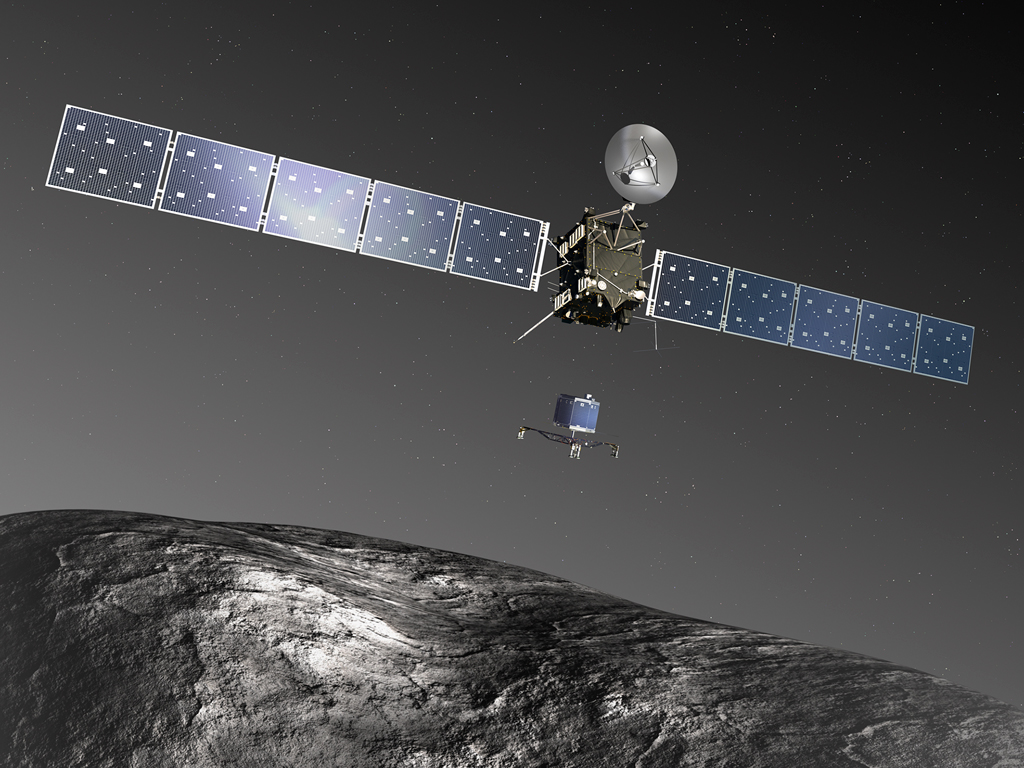


HONG KONG: The European Space Agency (ESA) says its comet-circling Rosetta probe will try to make contact with the Philae lander starting Thursday.
In case you’ve come in late, this story starts in 2004 when the ESA sent a craft called Rosetta in the direction of Comet 67P/Churyumov-Gerasimenko. Rosetta’s payload included Philae, a lander intended to set leg upon, and study, the coment.
Rosetta arrived last year, entered orbit and then dropped Philae. But Philae’s harpoons failed to operate as expected, the lander bounced and came to rest in a spot where its solar panels could not see the sun. While the lander was able to run its basic tests and beam back data, without solar top-ups it soon ran out of power. ESA boffins therefore put it into sleep mode.
The ESA’s hoped that Comet 67P would eventually rotate enough that sunlight would beam down upon Philae and that the lander would reactivate.
As explained in a new post“As soon as Philae ‘realises’ that it is receiving more than 5.5 watts of power and its internal temperature is above –45°C, it will turn on, heat up further and attempt to charge its battery.
The agency now says it thinks the time is right to ask Philae how it’s doing, because it thinks the “Philae currently receives about twice as much solar energy as it did in November last year,” according to lander project manager Manager Stephan Ulamec from the German Aerospace Center.
Starting March 12th, Rosetta will therefore start sending “wake up” commands to Philae at times it’s thought the lander should be in sunlight. Mission control doesn’t know exactly where Philae came to rest, but hopes that telling it to wake up will see its other programming kick in so that it sends out an automated health report.

Karachi Port sets 138-year cargo handling record
KARACHI: Pakistan's maritime sector has achieved a major milestone as Karachi Port set a new record in its 138-year history...