

Customs Today
  • Home
  • Islamabad
  • Karachi
  • Lahore
  • National
  • Transfers and Postings
  • Chambers & Associations
  • Business
No Result
View All Result
Customs Today
  • Home
  • Islamabad
  • Karachi
  • Lahore
  • National
  • Transfers and Postings
  • Chambers & Associations
  • Business
No Result
View All Result
Customs Today
No Result
View All Result
Home Uncategorized

Rosetta spacecraft collects strange UV readings from comet

byCustoms Today Report
06/06/2015
in Uncategorized
Share on FacebookShare on Twitter

You might also like

Pakistan to get $3b loan from Islamic Trade Financing Corporation

20/10/2024

Lahore I&I & Enforcement anti-smuggling operations achieve record success in early FY 2024-25

10/09/2024

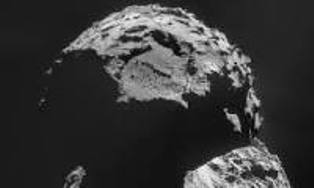
MALI: The Rosetta spacecraft orbiting around the comet 67P/Churyumov-Gerasimenko (67P) has recorded strange data in ultraviolet readings from the icy body. This announcement comes at the same time as NASA announced a proposed plan to crash the orbiter into the comet near the site where the Philae lander came to rest after an unsuccessful touchdown.
Comets can be thought of as dirty snowballs, in many respects. As they approach the sun, comets warm up, releasing carbon dioxide (CO2) and water through jets within their bodies. As these molecules rise, they are usually split apart by the action of photons of ultraviolet light from our parent star.
Atoms of hydrogen (from water), oxygen (from water and carbon dioxide) and carbon from CO2 each emit and absorb photons at specific frequencies. These can be measured from Earth, but not in the detail seen by Rosetta, currently circling the comet.
Researchers examining the phenomenon believed that photons of electromagnetic energy were driving the changes on 67P. But the Alice ultraviolet spectrograph onboard the Rosetta observatory found that nearly all of the observed molecular breakdowns surrounding the comet were actually driven by electrons.
“First, an ultraviolet photon from the sun hits a water molecule in the comet’s coma and ionizes it, knocking out an energetic electron. This electron then hits another water molecule in the coma, breaking it apart into two hydrogen atoms and one oxygen, and energizing them in the process. These atoms then emit ultraviolet light that is detected at characteristic wavelengths by Alice,” the European Space Agency (ESA) reported.
Astronomers could now utilize Alice to trace the jets of water and CO2 emissions down to their sources on the surface of the comet. This study could help researchers better understand the nature of cometary formation and development.


Related Stories

Pakistan to get $3b loan from Islamic Trade Financing Corporation

byCT Report
20/10/2024

ISLAMABAD: Islamic Trade Financing Corporation (ITFC) to provide Pakistan with a $3 billion loan, according to an official statement released...

Lahore I&I & Enforcement anti-smuggling operations achieve record success in early FY 2024-25

byCT Report
10/09/2024

LAHORE:  Regional Directorate of Customs Intelligence & Investigation has demonstrated exceptional performance in the first two months of the fiscal...

ICCI and CDA to join hands for tree plantation drive in Capital

byQaisar Mansoor
09/08/2023

ISLAMABAD: Islamabad Chamber of Commerce and Industry (ICCI) in collaboration with the Capital Development Authority (CDA) would jointly launch a...

Customs Officials Yawar Abbas & Tariq Mehmood kidnapped in Karachi

byCT Report
08/07/2023

KARACHI: Customs Intelligence Officer Yawar Abbas and Customs Preventive Officer Tariq Mehmood who were working against smuggling were kidnapped by...

Next Post

NASA 'flying saucer' launch postponed due to high winds

  • Terms and Conditions
  • Disclaimer

© 2011 Customs Today -World's first newspaper on customs. Customs Today.

No Result
View All Result
  • Transfers and Postings
  • Latest News
  • Karachi
  • Islamabad
  • Lahore
  • National
  • Chambers & Associations
  • Business
  • About Us

© 2011 Customs Today -World's first newspaper on customs. Customs Today.