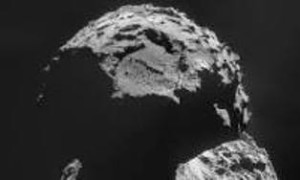


CANADA: When it came out of hibernation after seven months of silence back in mid-June, scientists at the European Space Agency were jubilant about what Philae, the first probe ever landed successfully on a comet, could tell them.
Berlin the Philae comet Lander has cascaded still, European scientists said on Monday, elevating reservations that often it has moved again on their new place countless kilometers from Earth.
Mission scientists will be keen to observe how regions such as Imhotep evolve as the comet approaches and subsequently distances itself from perihelion, which will herald a period of intense activity as frozen materials inside the comet are released by solar energy.
The other theory suggests that an error might have happened with Philae’s radio equipment making it unable to send back signals.
A command to switch on one of the probe’s scientific instruments, the Rosetta Lander Magnetometer and Plasma Monitor (Romap) was ignored.
According to Dr. Stephen Ulamec, DLR’s Philae project leader, “In the telemetry received, we have observed signs that Philae could have moved and that its antennas are thus perhaps more concealed or their orientation might have changed”. Ulamec believes there is enough time to reconnect with the lander before the comet gets too far from the sun and conditions get too dark, in September or October.

Karachi Port sets 138-year cargo handling record
KARACHI: Pakistan's maritime sector has achieved a major milestone as Karachi Port set a new record in its 138-year history...