Customs Today
  • Home
  • Islamabad
  • Karachi
  • Lahore
  • National
  • Transfers and Postings
  • Chambers & Associations
  • Business
No Result
View All Result
Customs Today
  • Home
  • Islamabad
  • Karachi
  • Lahore
  • National
  • Transfers and Postings
  • Chambers & Associations
  • Business
No Result
View All Result
Customs Today
No Result
View All Result
Home Latest News
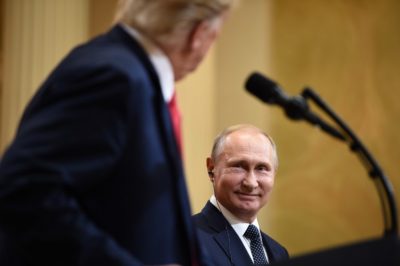
US President Donald Trump and Russia's President Vladimir Putin attend a joint press conference after a meeting at the Presidential Palace in Helsinki, on July 16, 2018. / AFP PHOTO / Brendan SMIALOWSKI

US President Donald Trump and Russia's President Vladimir Putin attend a joint press conference after a meeting at the Presidential Palace in Helsinki, on July 16, 2018. / AFP PHOTO / Brendan SMIALOWSKI

Russia Is Winning the Sanctions Game

byCT Report
16/03/2019
in Latest News
Share on FacebookShare on Twitter

Moscow : The current conversation about Russia sanctions centers around targeting and scope. Are we punishing the people whose behavior we most want to change? Is there pain, well inflicted, on those individuals responsible for creating chaos in Ukraine and Crimea, for reckless attacks on Sergei Skripal and others, and for wanton interference in Western elections? Can we hurt Russian elites in a way that Putin will notice? Have we done enough?

In at least one sector, though, the sanctions are a textbook case of unintended consequences: they’ve put Russian farmers in the best shape they’ve ever been. Countersanctions aimed at imported Western food products—put into effect just days after the initial sanctions in the summer of 2014—initially sent Russian consumers into a tailspin, hungry from a lack of immediate alternatives to tasty European cheeses and processed foods. But palates adjusted quickly, and the import substitution effects boosted Russia, by 2016, to the position of top wheat exporter in the world. As the United States hemorrhages global agro-market share courtesy of Trump-era tariffs and trade wars, Russia is actively and aggressively filling the gap.


You might also like

Ogra allows Cnergyico to export 40,000 tonnes furnace oil in April as surplus builds

25/04/2026
FILE PHOTO: Shipping containers are unloaded from ships at a container terminal at the Port of Long Beach-Port of Los Angeles complex, amid the coronavirus disease (COVID-19) pandemic, in Los Angeles, California, U.S., April 7, 2021. REUTERS/Lucy Nicholson

3,000 Iran-bound containers stranded at Karachi port as Hormuz tensions disrupt shipping

25/04/2026

In early 2014, following Russia’s illegal annexation of Crimea and continued involvement in separatist uprisings in eastern Ukraine, the United States, European Union, and several other Western countries imposed sanctions. Throughout 2014, these measures progressed from the diplomatic (limits on previously scheduled meetings and talks), to curbs on specific individuals and organizations (targeted visa bans and asset freezes), and finally, in July and September, to restrictions on Russia’s financial, defense, and energy sectors. The latter limited access to capital markets and low-interest loans, imposed an arms embargo and ban on exports of dual-use items to military clients, and prohibited export of innovative extractive technology (with special approval required for all other energy-related exports). Since 2014, the sanctions have been sustained and augmented, but they have remained within these categories.

In August of 2014, Russia initiated countersanctions to ban specific food commodities imported from the United States and EU. Affected foods included beef, poultry, fish/seafood, fruits/vegetables, nuts, milk and dairy, cheese, and a wide range of processed and prepared foods. The ban was broad, covering both staples and luxury items. It hit many foods on which Russia was most import-dependent, and its wide geographic scope (the range of countries it covers) has made it difficult to compensate fully for shortages by increasing imports from non-sanctioned countries.


Related Stories

Ogra allows Cnergyico to export 40,000 tonnes furnace oil in April as surplus builds

byCT Report
25/04/2026

ISLAMABAD: Oil and Gas Regulatory Authority (OGRA) has approved export of up to 40,000 metric tonnes of furnace oil for...

FILE PHOTO: Shipping containers are unloaded from ships at a container terminal at the Port of Long Beach-Port of Los Angeles complex, amid the coronavirus disease (COVID-19) pandemic, in Los Angeles, California, U.S., April 7, 2021. REUTERS/Lucy Nicholson

3,000 Iran-bound containers stranded at Karachi port as Hormuz tensions disrupt shipping

byCT Report
25/04/2026

KARACHI: Around 3,000 containers destined for Iran remain stranded at Karachi port as vessels scheduled to collect them have failed...

FPCCI to offer tax reform roadmap to help FBR meet revenue targets

byCT Report
25/04/2026

KARACHI: The Federation of Pakistan Chambers of Commerce and Industry has announced plans to provide strategic guidelines to the Federal...

Pakistan moves to empower women and microenterprises through SMEDA-PIFD partnership

byCT Report
25/04/2026

LAHORE: The Government of Pakistan has reiterated its commitment to strengthening women empowerment and expanding microenterprise development as key drivers...

Next Post

Consider getting businesses involved in Hong Kong waterfront, development minister Michael Wong says

  • Terms and Conditions
  • Disclaimer

© 2011 Customs Today -World's first newspaper on customs. Customs Today.

No Result
View All Result
  • Transfers and Postings
  • Latest News
  • Karachi
  • Islamabad
  • Lahore
  • National
  • Chambers & Associations
  • Business
  • About Us

© 2011 Customs Today -World's first newspaper on customs. Customs Today.