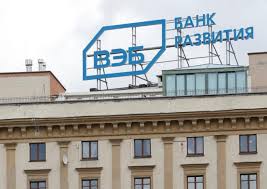
MOSCOW: Russian development bank Vnesheconombank (VEB), which has signed an MoU with Indian firm Srei Infrastructure Finance to create a $200 million IT and Innovation Fund, has announced it will help the Russian government develop a mechanism of funding the national digital economy programme.
“The Russian government has instructed three ministries to develop a mechanism of funding the programme Digital Economy together with Vnesheconombank. The Bank’s Supervisory Board will consider these issues in October,” VEB said in a release here on Saturday. The Digital Economy programme, initiated by Russian President Vladimir Putin, aims to provide 97 per cent of Russian households with broadband Internet access by 2025. “5G mobile networks should be deployed by this time in all cities with population of 1 million people,” the statement said. “In September, we will open the first centre focused on blockchain, convergent, and quantum technologies at the National University of Science and Technology (MISIS). We plan to create a group of investment funds with external financing from both Russian and foreign investors,” VEB Chairman Sergei Gorkov said in the statement.


In June, Kolkata-based Srei and Vnesheconombank signed an MoU to create a $200 million IT and Innovation Fund, which will enable them to jointly explore investment opportunities in technology companies in Russia, India and other selected regions. A group of Srei officials visited the Russian Quantum Centre here last month to check out technological solutions based on the principles of quantum physics that could be put to industrial use in the coming years. In the background of recent cyber attacks that affected networks across the world, Srei is looking at purchase of quantum communication devices designed to protect crucial information and data against the upcoming threat posed by the development of quantum computing.
The classical blockchain technology, on which bitcoins are based for instance, permit quantum computers to falsify digital signatures, change programming and even allow network access to outsiders. Earlier this year, Russia announced the development of the world’s first quantum blockchain which allows using a quantum cryptography and quantum data transfer system to protect databases from hacking. RQC says this device will be ready for industrial use by early next year. The technology has already been tested by the RQC in one of Russia’s largest banks — Gazprombank — by creating a three-node quantum network between the branches of the bank in the Moscow region. RQC is now working to expand the capability to other Russian and international financial services organisations.
Quantum theory is about nature at its smallest scale and energy levels and describes the behaviour of sub-atomic particles like electrons, protons, neutrons and photons. In silicon chips of classical computers, the unit of data is rendered in one of two states — 0 or 1 pertaining to true/false or yes/no state. However, in quantum theory, data could simultaneously exist in both states, holding exponentially more information. The unit, or “bit” in regular computing, becomes “qubit” in quantum theory, which can be either 0 or 1, or in superposition of them both at the same time. This means that where a normal computer makes calculations sequentially, one at a time, a quantum computer would be able to process information simultaneously, thus making it much more powerful.