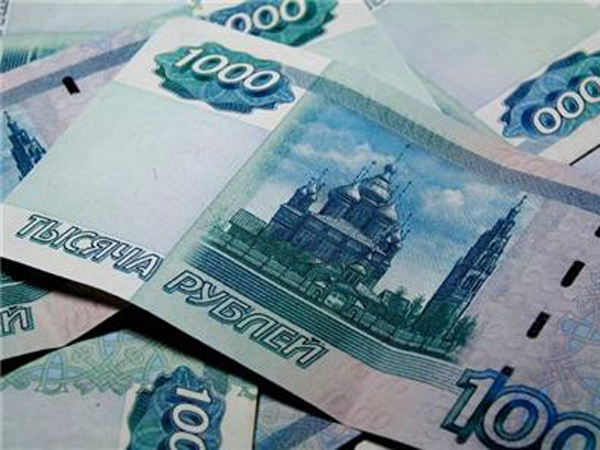
MOSCOW: Russian assets has slipped due to fall in oil prices and ruble was around 0.5 percent weaker at 61.8 against the dollar and lost 0.3 percent to trade at 70.4 against euro, but companies selling foreign currency for tax purposes curbed losses in the ruble.
Shares fell more, and yields on sovereign euro bonds ticked higher on long dated issues.


“The short-term prospects for the ruble will be determined by the dynamics of oil and the progress or lack of it over the Ukraine question,” Dmitry Polevoy, an analyst at ING Bank in Moscow, said in a note.
Brent crude oil fell over 2 percent, moving below $59 a barrel, on new worries of oversupply. Oil is one of Russia’s chief exports and hence an important influence on all Russian assets.
On Ukraine, investors were hoping for a full cease-fire after the Ukrainian army pulled out of Debaltseve, an important railway hub that has seen the fiercest fighting between pro-Russian rebels and government forces in recent weeks.
Fighting was still raging, despite European efforts to resurrect a truce agreed in the Belarussian capital, Minsk.
Analysts say market participants are looking beyond the fighting to the broader issue of whether Russia and the West can resolve their differences over Ukraine, making further economic sanctions less likely.
Meanwhile, a pickup in foreign-currency sales before the end-of-month tax period underpinned the ruble.
“We think exporters could have increased the hard-currency selling offer ahead of taxes next week, because in February export was mostly on the sidelines in the FX market,” Maxim Korovin, a forex analyst at VTB Capital, said in a note.
Russian exporters convert some of their foreign-currency earnings to pay ruble-denominated taxes to the state budget each month. That support has increased since the government began monitoring exporters’ forex sales to ease pressure on the ruble, which collapsed in December.
Moscow-listed shares dropped, following gains in the previous session and reflecting moves in the ruble.
The dollar-denominated RTS index was down 2.5 percent to 906 points. Its ruble-based peer MICEX fell 0.64 percent to 1,268 points.
Yields on Russian dollar Eurobonds maturing in 2042 and 2043 raised by 14 and 5 basis points, respectively. The yield on the benchmark 2030 dollar bond was little changed.