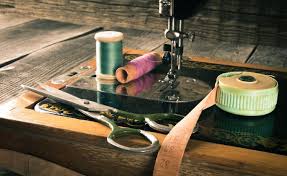
CAPETWON: South Africa is fighting to revive its frayed clothing industry, once a crucial provider of jobs in a country suffering from high unemployment, as a flood of cheap imports forces local factories to shutter and lay off workers. Once the economic lifeblood of many small regional towns, the abundance of cheaper products from China has led to the loss of nearly two-thirds of the sector’s jobs over the past two decades. After being employed for 22 years we were informed that the factory would close down in eight weeks,” said Vimla Padayachee, 46, who lost her job three years ago. The clothing factory in Verulam, north of the port city of Durban, shut down after years of battling low demand for its products. The former seamstress is one of thousands of clothing sector workers who have been made redundant, in a country where official unemployment is nearly 30 percent. The dire situation forced the government to intervene while business has called for a radical policy overhaul to stem the crisis. Inside a bustling factory in Maitland near Cape Town, workers bowed in front of rows of whirring sewing machines, stitching at a brisk pace to fulfil daily orders from a local chain store. It is one of the producers benefitting from government grants and loans designed to help companies recapitalise their operations. We’ve had a very rocky ride, and we have lost ground to the rest of the world,” said Christopher Kinross, who runs a clothing company that bears his name and employs 253 people. The industry is stagnant at the moment.”Kinross, who has been in the industry for more than 50 years, said the government’s scheme had brought “some stability”. But he stresses that more had to be done to promote competition and create jobs. There is no doubt that there is a will to help the industry. but the problems go beyond the influx of imports,” said Kinross. One of the main challenges facing the industry is a tax on importing raw materials essential for manufacturers. We pay 22 percent duty on imported fabrics if they remove that duty, our businesses could grow in a spectacular fashion,” he said. The industry has an amazing potential to create jobs but that is not happening.” Years of talks to remove the duty have been unsuccessful and there are no quotas on clothing imports. South Africa’s textiles and clothing sector contributes 3.3 percent to the nation’s overall economic output and is heavily reliant on domestic consumption. Foreign investment in apparel has repeatedly bypassed South Africa and instead gone to Lesotho, Swaziland and Madagascar, among other African nations. We pay wage levels that are relatively high for clothing manufacturing countries,” said Kinross. As much as 45 percent of sector income is spent on labour costs, he added. Only textile businesses that agree to pay a minimum wage set by the government qualify for official assistance. The support for the industry has been running for six years, supporting 505 beneficiaries and distributing 5.3 billion rand ($390 million). Whatever is needed to be done to protect the industry, it must be done,” said Rob Davies, the trade minister. But it should be in the interest of industry development and to improve the local supplier base.” The arrival of giant international “fast fashion” brands such as H&M and Zara opened another front in the battle being fought by South African clothing manufacturers.