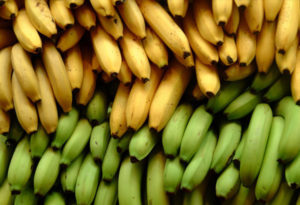
SEOUL: FILIPINO banana growers and exporters can now heave a sigh of relief after South Korea has decided not to push through with its plan of imposing stringent residue limits on some pesticides used in growing bananas. Maria Alilia G. Maghirang, head of the Philippine Agriculture Office in Seoul, said South Korea’s Ministry of Food and Drugs Safety (MFDS) favorably considered Manila’s requested pesticide maximum residue limits (MRLs) for bananas.
“The MFDS set the final MRL for chlorpyrifos at 2 parts per million [ppm], same as Food Code,” Maghirang said in a memorandum addressed to Agriculture Secretary Emmanuel F. Piñol. She noted that chlorpyrifos is a critical active ingredient for banana production already deleted in the Korean Food Code, but was applied for import-tolerance (IT) analysis. “It was supposed to be subjected to the default 0.01 ppm MRL if final IT was not issued this by end-December,” Maghirang said. The MFDS, Maghirang added, also set the final MRL for buprofecin at 2 ppm. The chemical is an active ingredient not in the Korean food code. She said Seoul also assigned a final MRL of 2 ppm for azoxystrobin, 0.1 ppm for bifenthrin and 0.1 ppm for thiophanate methyl.


Seoul is currently in the process of putting in place more stringent IT measures on tropical fruits. South Korea wanted to adopt a positive list system (PLS) starting January next year as an IT measure and to do away with the conventional standards on MRL.
The Food and Agriculture Organization (FAO) defines MRL as the maximum concentration of a pesticide residue legally permitted in food commodities and animal feeds. Conventionally, countries follow or pattern their importation measures after the Codex alimentarius, or more commonly known as the “food code”, which details specific limits for every chemical compounds found in pesticides known and used in the global market.
The transition from Codex to PLS would mean that South Korea will only keep its own MRL standards under the Korean Food Code, while any chemical ingredient that is not registered and recognized by it would automatically be assigned an MRL of 0.01 ppm. This means that any tropical fruit that has a pesticide residue exceeding 0.01 ppm will not be allowed to enter the Korean market starting January 1, 2017.
The MFDS issued the proposed partial amendments to the standards and specifications for foods of South Korea to solicit comments from the public. If there would be no further appeals or comments from Korea’s partner trading countries after December 20 regarding the new MRLs, MFDS said it will issue its final notification to the World Trade Organization for the implementation of the importation measures starting January.
Maghirang said Seoul has also granted Manila’s “special request” to prioritize IT analysis for chlorpyrifos and buprofecin. Piñol expressed his gratitude to the South Korean government for its “kind treatment” of Philippine farm products. “We would like to thank the government of South Korea for granting the request of Filipino farmers for a kinder and more compassionate treatment of Filipino agricultural products to South Korea,” he told the BusinessMirror.
The Pilipino Banana Growers and Exporters Association Inc. (PBGEA) said Seoul’s decision to grant Manila’s request will allow the Philippines to secure its share in the South Korean banana market. “This is very welcome news and we are thankful to the Korean MFDS. This will help us greatly in ensuring the quality of our Philippine banana exports,” PBGEA President Alexander N. Valoria told the BusinessMirror. In October Valoria said that, if Seoul pushes through with the 0.01 ppm regime on chlorpyrifos and other chemicals widely being used in the Philippines, banana growers and exporters could incur huge losses.
The Philippines accounts for more than 90 percent of bananas being imported by South Korea annually. Exporters shipped a total of 212,083 metric tons of bananas to South Korea valued at $80.99 million in 2015, according to data from the Philippine Statistics Authority (PSA). PSA data also showed that South Korea accounted for 12.31 percent of total Philippine banana exports last year.