NEW YORK: Now the people who fond of paddling will not be left behind in the 21st century and will also use SAT-NAV on their electric bike.
Ford may be known for its cars, but at this year’s Mobile World Congress the auto giant also unveiled a pair of electric bikes. Both prototypes are powered by 200-watt motors, fold to fit on a train or in the boot of a car, and with pedal assist, help riders reach speeds of up to 15mph (25km/h).
The bikes are part of an experiment by Ford called Handle on Mobility, which aims to make journeys safer and more efficient. They are also part of the company’s wider Smart Mobility plan, which is designed to make cars and other vehicles more connected.
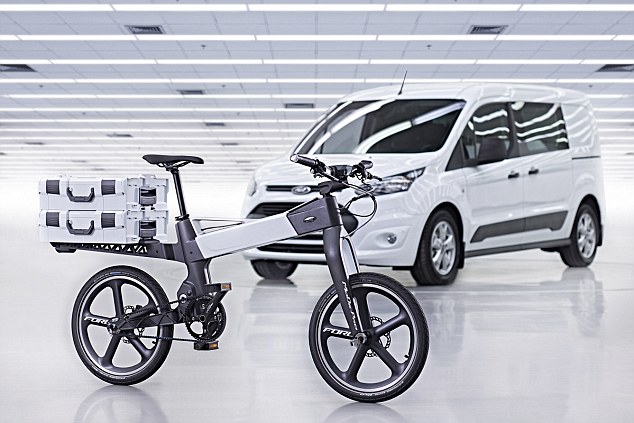
The bikes, called MoDe:Me and MoDe:Pro, are based on designs by Ford employees and take inspiration from technology seen in cars.
For example, both bikes are fitted with rear-facing ultrasonic sensors. These sensors link with the handlebars to discreetly alert the rider when a car is about to overtake using subtle vibrations. These handlebars also light up to make the bikes more visible to motorists.
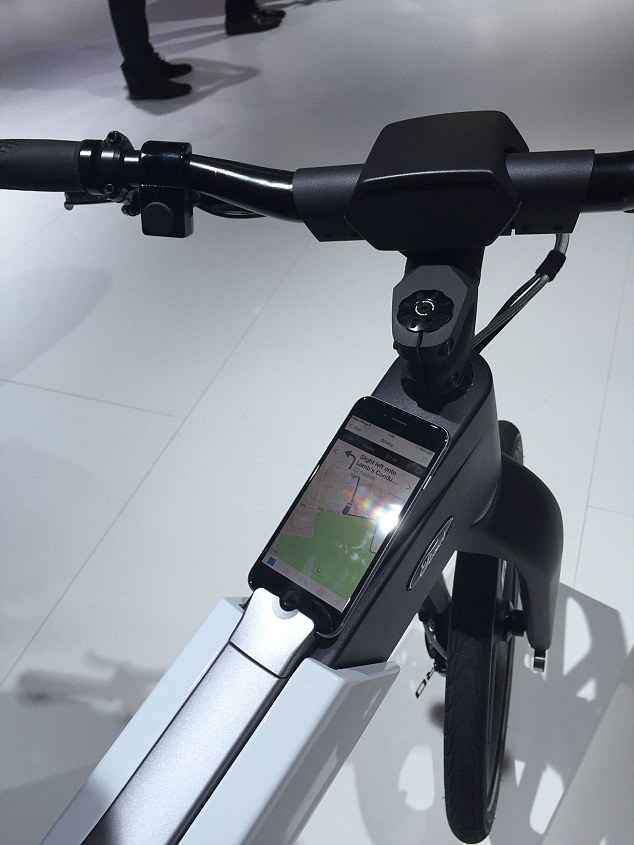
The MoDe:Me e-bike – built with the help of bicycle manufacturer Dahon – is designed for commuters ‘to keep moving in congested city traffic’.
It folds and stows easily, allowing commuters to park outside the city, for example, take the e-bike onto public transport and travel to the centre, then ride the e-bike to their destination.
Meanwhile, the MoDe:Pro e-bike – built by a Ford team – is intended for commercial use by couriers, electricians, and goods and delivery services. It is designed to stow safely into commercial vehicles which can act as carrier and support vehicle, and be combined with more than one e-bike.
Both prototypes work with an called MoDe:Link, which is currently only compatible with the iPhone 6.
This app acts as a sat-nav and sends vibrations to the handlebars so the rider knows when to change direction.
Turn signals are then triggered automatically for safety. The app also finds bike-friendly roads, hazards and alerts, and could ‘communicate’ with other vehicles.