Customs Today
  • Home
  • Islamabad
  • Karachi
  • Lahore
  • National
  • Transfers and Postings
  • Chambers & Associations
  • Business
No Result
View All Result
Customs Today
  • Home
  • Islamabad
  • Karachi
  • Lahore
  • National
  • Transfers and Postings
  • Chambers & Associations
  • Business
No Result
View All Result
Customs Today
No Result
View All Result
Home Latest News

Saudi Minister expects expansionary 2018 budget based on savings

byCT Report
17/05/2017
in Latest News
Share on FacebookShare on Twitter

RIYADH: Saudi Arabia’s budget next year will be “expansionary but not significantly” and in line with plans to balance state finances by 2020, Finance Minister Mohammed Al-Jadaan said. “Where the expansion will come is from the efficiency,” Al-Jadaan said in an interview in Jeddah on Tuesday. “So we are working on that — reducing a lot of the fat that is not necessary and then utilizing that in more productive investments.” The target for a balanced budget is central to the kingdom’s long-term plan to wean the economy off oil, which includes creating the world’s biggest sovereign wealth fund and privatizing some state assets. The Finance Ministry reported this month that the first-quarter deficit narrowed on higher oil revenue, boosting efforts to repair public finances. Deputy Crown Prince Mohammed bin Salman is trying to transform the Saudi economy as the plunge in oil prices squeezes state coffers. The government initially implemented an austerity drive that included reducing subsidies and temporarily trimming the wage bill. That led to rare public grumbling among some citizens and more privately from companies reliant on state spending. The government started preparing the 2018 budget in January, Al-Jadaan said. The first draft should be ready in two months, he said.

The country is also shifting to quarterly reports on economy from annual to boost transparency as it implements the economic plan, dubbed Saudi Vision 2030. In December, the government said it planned to spend 890 billion riyals ($237 billion) in 2017, with revenue at 692 billion riyals and a full-year deficit of 198 billion riyals. Austerity measures, combined with the drop in oil prices that prompted them, have caused the kingdom’s worst economic slowdown since the global financial crisis. There are plans to impose an excise tax on soda and tobacco from the second quarter of 2017 and a 5 percent value-added tax in the first quarter of 2018 to boost government revenue. The plan for the excise tax “is still on,” Al-Jadaan said. “We are preparing the market, we are preparing participants and coordinating with other” Gulf Cooperation Council countries, he said.


You might also like

IMF approves $1.2bn loan tranche for Pakistan

08/05/2026

ICCI hails Court verdict against ‘deemed Income’ tax on properties

08/05/2026
Tags: Saudi Minister expects expansionary 2018 budget based on savings

Related Stories

IMF approves $1.2bn loan tranche for Pakistan

byCT Report
08/05/2026

ISLAMABAD: The International Monetary Fund has approved a $1.2 billion loan tranche for Pakistan, providing a significant boost to the...

ICCI hails Court verdict against ‘deemed Income’ tax on properties

byCT Report
08/05/2026

ISLAMABAD: President  Islamabad Chamber of Commerce and Industry Sardar Tahir Mehmood has welcomed the landmark decision declaring Section 7-E of...

Pakistan likely to receive $1.2b IMF tranche as board meets today

byCT Report
08/05/2026

ISLAMABAD: Pakistan is expected to receive a $1.2 billion tranche from the International Monetary Fund (IMF) soon, as the Fund’s...

Pakistan rejects LNG spot bids hoping for cheaper Qatari supplies

byCT Report
08/05/2026

LAHORE: Pakistan has decided not to approve the lowest bids submitted for two spot LNG cargoes despite receiving competitive offers...

Next Post
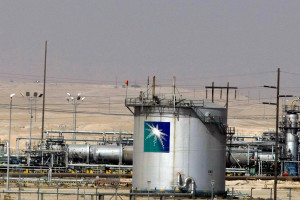
A general view shows the Saudi Aramco oil facility in Dammam city, 450 kms east of the Saudi capital Riyadh, 23 November 2007. Sky-rocketing oil prices that are within striking distance of 100 dollars a barrel have flooded the coffers of the six Gulf Cooperation Council (GCC) members -- Bahrain, Kuwait, Oman, Qatar, Saudi Arabia and United Arab Emirates -- which supply one fifth of world demand. AFP PHOTO/HASSAN AMMAR (Photo credit should read HASSAN AMMAR/AFP/Getty Images)

Saudi Aramco tightens grip in top oil market with china refinery

  • Terms and Conditions
  • Disclaimer

© 2011 Customs Today -World's first newspaper on customs. Customs Today.

No Result
View All Result
  • Transfers and Postings
  • Latest News
  • Karachi
  • Islamabad
  • Lahore
  • National
  • Chambers & Associations
  • Business
  • About Us

© 2011 Customs Today -World's first newspaper on customs. Customs Today.