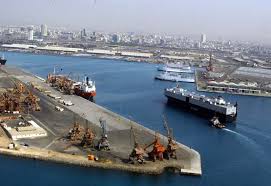
SAUDI PORT: Transportation infrastructure is at the centre of Saudi Arabia’s plans to diversify its oil-dependent economy into a connected modern economy.
The plans form part of an unprecedented period of investment following the accession of King Salman bin Abdulaziz al-Saud in January and the sharp fall in oil prices over the past year. The government is dipping into its massive foreign exchange reserves to maintain spending on large-scale capital projects, including ports expansion schemes needed to service the growing economy and facilitate diversification plans.
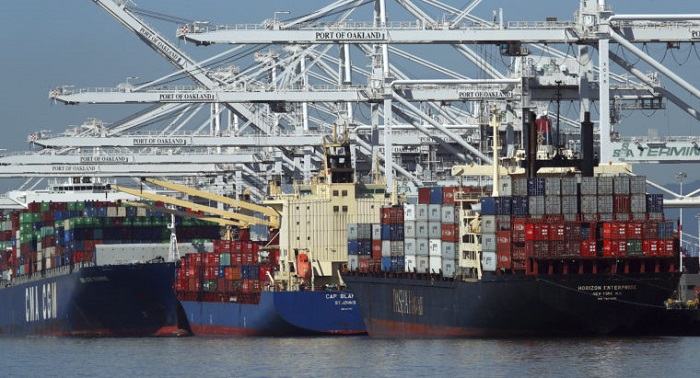

While 84 per cent of growth in exports over the next 15 years will be linked to mineral fuels, other growing exports include chemicals, plastics and gas as state-backed diversification schemes boost downstream energy-related industries, says HSBC.
“The focus of current port efforts has been on the infrastructure fundamentals required to grow the cargo-related business and some emphasis has been placed on improving efficiency,” says Darryl Anderson, managing director of Canada-based Wave Point Consulting.
Saudi Arabia’s western seaboard, location of the commercial centre of Jeddah, is at the centre of this drive. The kingdom’s west coast accounts for 70 per cent of the cargo moving in and out of the country, according to the Saudi Ports Authority.
King Abdullah Port (KAP), the country’s newest port on the west coast, is at the heart of one of the kingdom’s most aggressive economic diversification experiments, a bespoke port and free zone development near Rabigh, north of Jeddah.
Located within King Abdullah Economic City, the port is the centrepiece of this nascent economic zone that has already lured some of the world’s biggest companies, such as Mars, Pfizer and Danone.
The port already has a container capacity of 3m 20ft equivalent units (teu), which is expected to rise to 4m teu early next year as the surrounding city grows from a population of 3,000 to 50,000 by the end of the decade.
Abdullah Hameedadin, KAP’s managing director, says the ambitious long-term goal is the creation of a twin-basin facility, reminiscent of Thailand’s Laem Chabang port, but almost double the size, at a capacity of 20m teu.
The planned expansion will put Saudi Arabia’s newest port facility on a par with the busiest transshipment hub in the Middle East, Dubai’s Jebel Ali Port, which is expected to reach a capacity of 19m teu later this year.
KAP is managed by Ports Development Company, a joint venture between Saudi Binladin Group, a construction group, and Emaar The Economic City, the Saudi arm of Dubai property power house Emaar Properties — Saudi Arabia’s first port to be run outside the purview of the Saudi Ports Authority (SPA). Port officials expect it to handle in excess of 1.5m teu this year.
The new facility has already managed to lure major shipping lines, including both members of the world’s leading 2M alliance, Mediterranean Shipping Co and Maersk Line.
“Maintaining the commercial interest of the major shipping alliance is key to the long-term success of the container facilities and the port’s aspiration to be a major east-west marine transshipment location,” says Mr Anderson.
But the port faces challenges. Local traders tend to use Jeddah Islamic Port as a gateway facility for handling imports and exports and JIP is likewise feeling competitive pressures as companies choose where to put their business.
JIP, established in 1976, is still the kingdom’s biggest facility, but it cannot expand due to its proximity to the city and it suffers from bottlenecks. JIP has a capacity of 6.5m teu, but handled only about 4.5m teu last year, according to Sahir Tahlawi, former director-general of JIP.
Aware of the competitive threat, Nabeel Al Amoudi, newly appointed president of SPA, is said to be trying to ensure that it does not lose business to KAP.
The competition from KAP comes as other west coast ports are growing. Yanbu is driven by petrochemicals exports from nearby production facilities.
New ports are also planned at the south western city of Jizan, which will focus on exporting refined oil products, and at Al-Lith — to handle general cargo diverted from JIP.
Linking the commercial west with the oil-rich east is another major government project leading the diversification drive. The Saudi Landbridge, connecting western Rabigh and Jeddah to eastern Dammam and Jubail by rail, could further revolutionise cargo transport in the Gulf.
Scheduled for completion in 2020, the $7bn project includes the refurbishment and laying of over 1,100km of new track. But bureaucratic disorder threatens to undermine the efficiency of this complex project.
“A key challenge moving forward will be also investing in training and logistics capacity to develop solutions that integrate and leverage the infrastructure investments of the ports and railways,” says Mr Anderson. Only then can “the supply chain requirements of customers and the challenges of an expanding economy be met”.