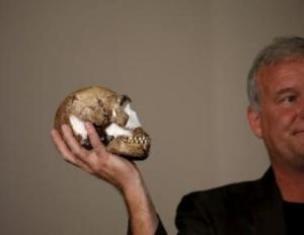


MEXICO: What sets humans apart from other species was that people had certain customs unique to them. Scientists, however, have discovered that an ancient species also exhibited a tradition that previously thought of to be unique to humans: burying their dead.
According to scientists, the species Homo naledi, named after the “Rising Star” cave close to the famous sites Sterkfontein and Swartkrans they were found in (Naledi translates to “star” in the Sesotho language in South Africa), buried its dead, a tradition previously thought to be exclusively human.
Piecing together over 1,500 fragments, the scientists were able to come up with the largest single collection of human and human-related fossils made up of infants to the elderly totaling 15 individuals. There were no other remains from other species discovered in the site and there were no tooth or claw marks on the bones so it was ruled out that the area was ruled over by a predator.
“It does appear after eliminating all other possibilities that Homo naledi was deliberately disposing of its body in a repeated fashion,” said Lee Berger from the University of the Witwatersrand in Johannesburg.

Karachi Port sets 138-year cargo handling record
KARACHI: Pakistan's maritime sector has achieved a major milestone as Karachi Port set a new record in its 138-year history...