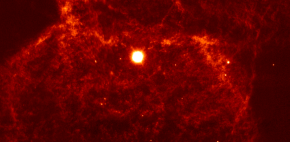


CANADA: NOAO scientists, using the Gemini Observatory 8-meter telescope in Chile, have obtained the highest resolution image ever obtained for the planetary nebula NGC 2346. Shaped like a butterfly, or an hourglass, but known scientifically as a bipolar planetary nebula, this object is at a distance of 2300 light years from our sun in the constellation Monoceros.
The new observations of this gaseous nebula, shown in the first figure, resolve details comparable in size to our own solar system. The team detected previously unresolved knots and filaments of molecular hydrogen gas – details that no other telescope on the ground or in space, not even the Hubble Space Telescope, has been able to resolve.
Molecular hydrogen in the bipolar lobes of NGC 2346 was detected almost 30 years ago, although previous observations suggested only a smooth torus. This filamentary structure observed by the team matches the mechanism they have proposed in which a hot bubble of gas surrounding the central star breaks out and fragments the shell of surrounding gas. The gaseous knots probably represent a common phenomenon that occurs whenever two fluids (or gasses) of different densities come in contact, and the lighter fluid is pushing on the heavier fluid. This is easily seen by anyone who has ever watched colored oil in a glass of water.

Karachi Port sets 138-year cargo handling record
KARACHI: Pakistan's maritime sector has achieved a major milestone as Karachi Port set a new record in its 138-year history...