Customs Today
  • Home
  • Islamabad
  • Karachi
  • Lahore
  • National
  • Transfers and Postings
  • Chambers & Associations
  • Business
No Result
View All Result
Customs Today
  • Home
  • Islamabad
  • Karachi
  • Lahore
  • National
  • Transfers and Postings
  • Chambers & Associations
  • Business
No Result
View All Result
Customs Today
No Result
View All Result
Home Science & Technology Science

Scientists able to direct path of laboratory mice with a combination of drugs, lights

byCustoms Today Report
03/08/2015
in Science, Science & Technology
Share on FacebookShare on Twitter

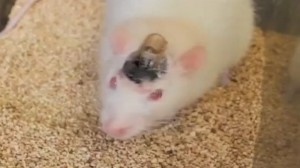
LONDON: Scientists have successfully altered the neural networks of laboratory mice using a wireless controller; allowing them to study the effects of neural stimulation without invasive procedures and without test subjects tethered by wires.

The tiny implant, smaller than the width of a human hair, let the scientists determine the path a mouse walks using a remote control to inject drugs and shine lights on neurons inside the brain.


You might also like

Tesla driverless system to use updated radar technology

12/09/2016

Apple to develop its own self-driving technology

10/09/2016

Neuroscientists have until now been limited to injecting drugs through larger tubes and delivering photostimulation through fibre-optic cables, both of which require surgery that can damage the brain and restrict an animal’s natural movements.

The optofluidic implant developed by the team from Washington University School of Medicine and the University of Illinois was found to damage and displace much less brain tissue than the metal tubes, or cannulas, scientists typically use to inject drugs.

The device is mounted to the head of the mouse and is powered by a small battery, removing the need for it to be wired, and contains tiny reservoirs filled with the drugs to be administered during tests.

In one such experiment, mice were made to walk in circles after a drug that mimics morphine was injected into the region of the mouse’s brain that controls motivation and addiction.

In other tests the scientists used a technique known as optogenetics, where mice have been modified so that their neurons are lights sensitive, to stimulate the mice’s brain cells with miniature LEDs. The test subjects were made to stay on one side of a cage by remotely making the implant shine pulses of light on the specific cells. The mice were about three feet away from the remote antenna during the experiments.

The research, published recently in scientific journal Cell, could lead to the development of more minimally invasive probes to treat neurological disorders including stress, depression, addiction, and pain.




Related Stories

Tesla driverless system to use updated radar technology

byCT Report
12/09/2016

WASHINGTON: Electric carmaker Tesla announced Sunday it was upgrading its Autopilot software to use more advanced radar technology. In a...

Apple to develop its own self-driving technology

byCT Report
10/09/2016

SAN FRANCISCO: Apple may not become an automaker, but it still wants to develop its own self-driving technology. The iPhone-maker's...

NASA spots slowest known magnetar

byCT Report
10/09/2016

WASHINGTON: Astronomers have found evidence of a magnetar - magnetised neutron star - that spins much slower than the slowest...

‘YouTubers’ outshining old-school television

byCT Report
09/08/2016

SAN FRANCISCO: A media revolution is taking place, and most people over 35 years of age aren’t tuned in. Millennial...

Next Post

Butterfly-inspired technique can help to make solar energy cheaper

  • Terms and Conditions
  • Disclaimer

© 2011 Customs Today -World's first newspaper on customs. Customs Today.

No Result
View All Result
  • Transfers and Postings
  • Latest News
  • Karachi
  • Islamabad
  • Lahore
  • National
  • Chambers & Associations
  • Business
  • About Us

© 2011 Customs Today -World's first newspaper on customs. Customs Today.