Customs Today
  • Home
  • Islamabad
  • Karachi
  • Lahore
  • National
  • Transfers and Postings
  • Chambers & Associations
  • Business
No Result
View All Result
Customs Today
  • Home
  • Islamabad
  • Karachi
  • Lahore
  • National
  • Transfers and Postings
  • Chambers & Associations
  • Business
No Result
View All Result
Customs Today
No Result
View All Result
Home Science & Technology Science

Scientists can determine age of galaxy

bySana Anwar
20/11/2015
in Science, Science & Technology
Share on FacebookShare on Twitter

CANADA: It turns out that the increasing and decreasing brightness of some stars might hold clues to their host galaxy’s age, according to a study published in the journal Nature on Monday. Since stars begin to pulsate near the end of their lifetime, that can provide valuable insight into a galaxy’s own lifetime.

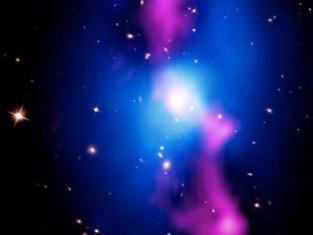
Astronomers have measured the “pulses” of thousands of stars in the distant elliptical galaxy Messier 87, or M87, and were able to use that data to calculate that it is about 10 billion years old, a number that corresponds with previous estimates found using other techniques.


You might also like

Tesla driverless system to use updated radar technology

12/09/2016

Apple to develop its own self-driving technology

10/09/2016

“We have relatively few ways to determine how old galaxies are,” Dr. Charlie Conroy, assistant professor of astronomy at Harvard University and the study’s lead author, told The Huffington Post. “This gives us a new tool to determine a galaxy’s age, which is especially important for ancient galaxies like M87. The stars in this galaxy probably formed a very long time ago — maybe 10 billion years ago — and if that’s true then this galaxy is a fossil relic from a much earlier time in the universe.”

The astronomers analyzed images of galaxy M87 taken by the Hubble Space Telescope in 2006. They noticed that the combined illumination of all the stars in the galaxy, which is located some 53 million light-years from Earth, varied every 270 days due to the increasing and decreasing brightness of each star.


Related Stories

Tesla driverless system to use updated radar technology

byCT Report
12/09/2016

WASHINGTON: Electric carmaker Tesla announced Sunday it was upgrading its Autopilot software to use more advanced radar technology. In a...

Apple to develop its own self-driving technology

byCT Report
10/09/2016

SAN FRANCISCO: Apple may not become an automaker, but it still wants to develop its own self-driving technology. The iPhone-maker's...

NASA spots slowest known magnetar

byCT Report
10/09/2016

WASHINGTON: Astronomers have found evidence of a magnetar - magnetised neutron star - that spins much slower than the slowest...

‘YouTubers’ outshining old-school television

byCT Report
09/08/2016

SAN FRANCISCO: A media revolution is taking place, and most people over 35 years of age aren’t tuned in. Millennial...

Next Post

Puget sound ports can compete globally

  • Terms and Conditions
  • Disclaimer

© 2011 Customs Today -World's first newspaper on customs. Customs Today.

No Result
View All Result
  • Transfers and Postings
  • Latest News
  • Karachi
  • Islamabad
  • Lahore
  • National
  • Chambers & Associations
  • Business
  • About Us

© 2011 Customs Today -World's first newspaper on customs. Customs Today.