

Customs Today
  • Home
  • Islamabad
  • Karachi
  • Lahore
  • National
  • Transfers and Postings
  • Chambers & Associations
  • Business
No Result
View All Result
Customs Today
  • Home
  • Islamabad
  • Karachi
  • Lahore
  • National
  • Transfers and Postings
  • Chambers & Associations
  • Business
No Result
View All Result
Customs Today
No Result
View All Result
Home Science & Technology Science

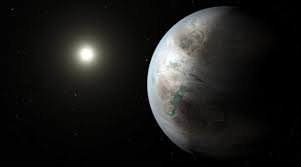
Scientists confirm planet orbiting another star

byCustoms Today Report
03/08/2015
in Science, Science & Technology
Share on FacebookShare on Twitter

You might also like

Tesla driverless system to use updated radar technology

12/09/2016

Apple to develop its own self-driving technology

10/09/2016

EUROPE: Geoff Marcy remembers the hair standing up on the back of his neck. Paul Butler remembers being dead tired. The two men had just made history: the first confirmation of a planet orbiting another star.The groundbreaking discovery had been announced less than week earlier by the European team of Michel Mayor and Didier Queloz. But the news was met with some initial skepticism in the astronomical community. By a stroke of good luck, Marcy and Butler happened to have previously scheduled observation time on a 120-inch telescope at the Lick Observatory, atop California’s Mount Hamilton.
The scientists, who would become two of the world’s most famous planet hunters, remember driving down the mountainside together in October 1995. They’d spent four straight nights making their observations. And while further processing would be needed to make the scientific case, their data seemed clear and unmistakable—and almost impossible. A huge planet, at least half the size of Jupiter, was not only orbiting its host star more tightly than Mercury hugs the sun. It was racing around that star, making a complete orbit in just four days.
The planet, called 51 Pegasi b, would open a new era in humanity’s exploration of our galactic neighborhood. It would be the first in a series of “hot Jupiters”—giant planets in fast, tight orbits—discovered in rapid succession. The rush of new worlds would propel Marcy, Butler and their research team into the media spotlight, and forever change our view of the cosmos.

Related Stories

Tesla driverless system to use updated radar technology

byCT Report
12/09/2016

WASHINGTON: Electric carmaker Tesla announced Sunday it was upgrading its Autopilot software to use more advanced radar technology. In a...

Apple to develop its own self-driving technology

byCT Report
10/09/2016

SAN FRANCISCO: Apple may not become an automaker, but it still wants to develop its own self-driving technology. The iPhone-maker's...

NASA spots slowest known magnetar

byCT Report
10/09/2016

WASHINGTON: Astronomers have found evidence of a magnetar - magnetised neutron star - that spins much slower than the slowest...

‘YouTubers’ outshining old-school television

byCT Report
09/08/2016

SAN FRANCISCO: A media revolution is taking place, and most people over 35 years of age aren’t tuned in. Millennial...

Next Post

US oil companies ready to invest in Iran

  • Terms and Conditions
  • Disclaimer

© 2011 Customs Today -World's first newspaper on customs. Customs Today.

No Result
View All Result
  • Transfers and Postings
  • Latest News
  • Karachi
  • Islamabad
  • Lahore
  • National
  • Chambers & Associations
  • Business
  • About Us

© 2011 Customs Today -World's first newspaper on customs. Customs Today.