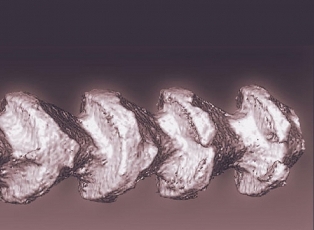


PARIS: Scientists have developed an artificial skeleton-like material via a chemical process and the method could pave way for a new and better way to integrate medical devices into the body.
The researchers from the University of Chicago have made the first skeleton-like silicon spicules prepared through a chemical process. They said that the breakthrough shows potentials for improving interaction between implantable medical devices and soft biological tissues as well as open up new doors for developing electronics that enhance sensing and stimulation at biointerfaces.
Study researcher Bozhi Tian, from the Department of Chemistry of the University of Chicago, and colleagues came up with a new method to synthesize and fabricate three-dimensional semiconductors. They developed a pressure modulation synthesis with the aim of promoting the growth of silicon nanowires and induce the gold-based patterns in the silicon with gold acting as the growth catalyst of the silicon.
The researchers were able to control the precipitation and diffusion of the gold along the faceted surfaces of the silicon by repeatedly increasing and decreasing the pressures on the samples.

Karachi Port sets 138-year cargo handling record
KARACHI: Pakistan's maritime sector has achieved a major milestone as Karachi Port set a new record in its 138-year history...