

Customs Today
  • Home
  • Islamabad
  • Karachi
  • Lahore
  • National
  • Transfers and Postings
  • Chambers & Associations
  • Business
No Result
View All Result
Customs Today
  • Home
  • Islamabad
  • Karachi
  • Lahore
  • National
  • Transfers and Postings
  • Chambers & Associations
  • Business
No Result
View All Result
Customs Today
No Result
View All Result
Home Science & Technology Science

Scientists developed method for uncovering invisible fingerprints which glow under UV light

bySana Anwar
21/10/2015
in Science, Science & Technology
Share on FacebookShare on Twitter

You might also like

Tesla driverless system to use updated radar technology

12/09/2016

Apple to develop its own self-driving technology

10/09/2016

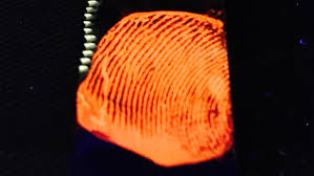
LONDON: Fingerprinting powders are still the go-to tool for investigators, both real and fictional. However, instead of oils, some fingerprints only leave a residue of amino acids and other compounds that fingerprinting powder doesn’t adhere to very well. A new technique developed at Australia’s CSIRO not only reveals fingerprints in cases where dusting won’t, but makes them glow under UV light.
After his house was broken into, CSIRO materials scientist Dr Kang Liang saw first hand how important fingerprinting is for law enforcement agencies. Dusting for prints is still the most common technique used by investigators, but there are a number of different methods to collect latent (hidden) fingerprints from a crime scene.
Superglue fuming or the use of chemical reagents are widely used when dusting fails, but these can be time consuming or will usually require the object being examined to be sent to a lab, which isn’t always possible. Liang wondered if new materials might provide another alternative that could overcome the shortcomings of current techniques.
He turned to metal-organic framework (MOF) crystals that, when applied to surfaces in a drop of liquid, rapidly bind to fingerprint residue, including proteins, peptides, fatty acids and salts. In around 30 seconds, this results in an ultrathin coating that forms an exact copy of the fingerprint and glows under UV light, enabling high resolution images to be easily captured for analysis. Different colored fingerprints are also possible by altering the chemistry of the solution.

Related Stories

Tesla driverless system to use updated radar technology

byCT Report
12/09/2016

WASHINGTON: Electric carmaker Tesla announced Sunday it was upgrading its Autopilot software to use more advanced radar technology. In a...

Apple to develop its own self-driving technology

byCT Report
10/09/2016

SAN FRANCISCO: Apple may not become an automaker, but it still wants to develop its own self-driving technology. The iPhone-maker's...

NASA spots slowest known magnetar

byCT Report
10/09/2016

WASHINGTON: Astronomers have found evidence of a magnetar - magnetised neutron star - that spins much slower than the slowest...

‘YouTubers’ outshining old-school television

byCT Report
09/08/2016

SAN FRANCISCO: A media revolution is taking place, and most people over 35 years of age aren’t tuned in. Millennial...

Next Post

Astronomers expect spectacular show this week from Orionid meteor shower

  • Terms and Conditions
  • Disclaimer

© 2011 Customs Today -World's first newspaper on customs. Customs Today.

No Result
View All Result
  • Transfers and Postings
  • Latest News
  • Karachi
  • Islamabad
  • Lahore
  • National
  • Chambers & Associations
  • Business
  • About Us

© 2011 Customs Today -World's first newspaper on customs. Customs Today.