

Customs Today
  • Home
  • Islamabad
  • Karachi
  • Lahore
  • National
  • Transfers and Postings
  • Chambers & Associations
  • Business
No Result
View All Result
Customs Today
  • Home
  • Islamabad
  • Karachi
  • Lahore
  • National
  • Transfers and Postings
  • Chambers & Associations
  • Business
No Result
View All Result
Customs Today
No Result
View All Result
Home Science & Technology Science

Scientists discover moon dust is filling in astronaut footprints

byCustoms Today Report
19/06/2015
in Science, Science & Technology
Share on FacebookShare on Twitter

You might also like

Tesla driverless system to use updated radar technology

12/09/2016

Apple to develop its own self-driving technology

10/09/2016

MEXICO: Scientists have discovered a lopsided cloud of moon dust hovering over that shining orb in the night sky.
Each speck of dust hangs above the moon for only a few minutes before showering back onto the lunar surface. But the nimbus of dust constantly replenishes, forming a permanent feature around the moon.
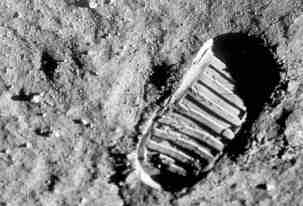
The pattern of dust falling back to its home “in due time … will fill in craters,” says the University of Colorado, Boulder’s Mihaly Horanyi, who led the team that found the dust cloud. “Eventually this will erase the footprints of the astronauts.”
The moon wears this hazy veil thanks to the comet dust that speckles the solar system. When a bit of dust from a comet’s tail slams into the moon, the collision kicks up thousands of particles of moon dust, which are carried high above their resting place on the lunar surface, Horanyi says. The moon-dust cloud was especially thick during the Geminid meteor shower, when the Earth and its sidekick swing through a particularly thick belt of debris.
Thick is relative. From near the moon’s surface to more than 70 miles up, the cloud tops out at only 260 pounds of dust. But the rise and fall of all those dust grains helps form the moon’s character, Horanyi says. The team’s findings stem from data collected by NASA’s LADEE spaceship, which reached the moon in 2013. The study appears in this week’s Nature.

Related Stories

Tesla driverless system to use updated radar technology

byCT Report
12/09/2016

WASHINGTON: Electric carmaker Tesla announced Sunday it was upgrading its Autopilot software to use more advanced radar technology. In a...

Apple to develop its own self-driving technology

byCT Report
10/09/2016

SAN FRANCISCO: Apple may not become an automaker, but it still wants to develop its own self-driving technology. The iPhone-maker's...

NASA spots slowest known magnetar

byCT Report
10/09/2016

WASHINGTON: Astronomers have found evidence of a magnetar - magnetised neutron star - that spins much slower than the slowest...

‘YouTubers’ outshining old-school television

byCT Report
09/08/2016

SAN FRANCISCO: A media revolution is taking place, and most people over 35 years of age aren’t tuned in. Millennial...

Next Post

Verizon special feature allows user test Android 5.1 version update on Motorola Droid Turbo

  • Terms and Conditions
  • Disclaimer

© 2011 Customs Today -World's first newspaper on customs. Customs Today.

No Result
View All Result
  • Transfers and Postings
  • Latest News
  • Karachi
  • Islamabad
  • Lahore
  • National
  • Chambers & Associations
  • Business
  • About Us

© 2011 Customs Today -World's first newspaper on customs. Customs Today.