
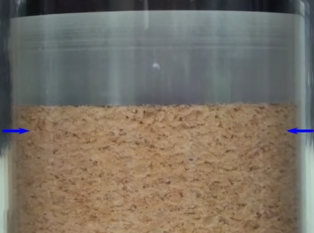
WASHINGTON: Scientists in a lab at San Diego State University fill a tube with Rice Krispies, slowly crush them with a trash compactor and turn the sounds into music. It’s tempting to think academia has finally lost its wits, but these researchers are actually documenting an interesting phenomenon that hadn’t been demonstrated before: the song of compression.
A recent study by a SDSU civil engineer professor and his students shows that “highly porous, brittle materials” break down in different ways, depending on the velocity of the compression, or what I’ll call Crunch Factor. These materials would include some of our favorite breakfast staples — Rice Krispies, Cocoa Puffs and Cocoa Krispies — and also describes some things that present compaction and disposal issues in the real world; stuff like packing peanuts or the snow after an avalanche. So, knowing how these types of materials react to compaction could have important consequences for engineers.


To get a full picture of what happens when you crunch Rice Krispies and similar materials, the researchers put microphones at the top and bottom of the Krispie-filled tube, then slowly compacted the cereal from the top, down. Based on typical friction experiments, the researchers assumed that, as the piston came down, the top of the cereal would crush, then more cereal below that layer, then more below that layer and on to the bottom. That mimics most of our experiences; picture crushing a car, for example. The car crusher comes down, destroying the top of the car, then the middle of the car, then the bottom. This seems pretty simple and intuitive. However, with porous, brittle materials, the story is entirely different.



