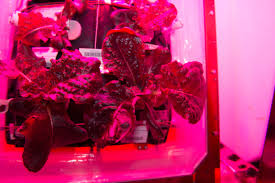
LONDON: “We hope to increase the amount and type of crop in the future, and this will allow us to learn more about growing plants in microgravity”, Massa stated. The lettuce was grown on the “Veggie” plant system in NASA’s orbiting lab on the space station. Still, half the crew’s harvest will be sent back to Earth for more testing. Last May, however, the first batch of pillows was activated and cared for by Expedition 39 engineer Steve Swanson. That crop of lettuce came back to Earth in October 2014, and scientists on the ground analyzed it for safety.
“That was harvested and brought down on Space X to get it analyzed for microbials and any kind of impurities”, said Paul Zamprelli of Orbitec, the company that developed the veggie system in a video uploaded by NASA. While in space, the plants were exposed to a micro-gravity environment under red and blue LED lights.


The crew ate red romaine lettuce as part of a Nasa study which is deemed critical to the success of the organisation’s Journey to Mars programme.
Astronaut Kjell Lindgren said he appreciated the psychological benefit of growing plants while surrounded by the sterility of the lifeless space station. The astronauts who are spending time on space station nurtured their lettuces using colored lights in a special pod.
Besides, gardening is fun on Earth, and NASA said astronauts likely will use it as a recreational activity on long missions.
While Monday’s healthy snack won’t likely be particularly filling for the astronauts, it could pave the way to future crops grown on the space station and even on other planets. Kelly activated the seed pillows on July 8, and then tended to the plants for 33 days before harvesting.
American astronaut Scott Kelly and two of the six crew members of the orbital outpost consumed each a red romaine lettuce with added oil and vinegar, according to live images from NASA TV. The astronauts will clean the leafy vegetables with citric acid-based, food safe sanitising wipes before consuming them.
“I think that plant systems will become important components of any long-duration exploration scenario”.
The lettuce grew in a rooting “pillow” that contains the seeds and soil for the plants.