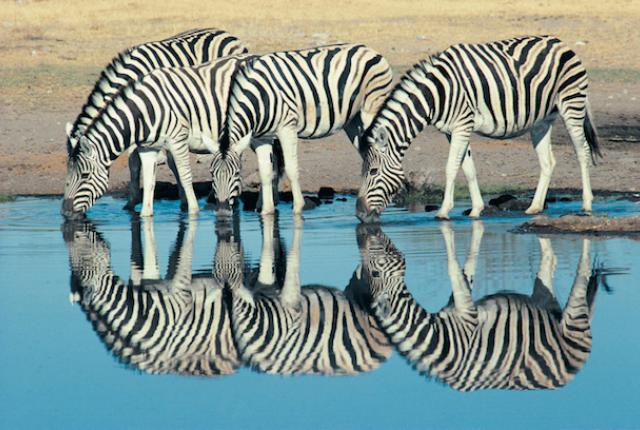
AFRICA: All three species of zebra have bold stripes in comparison to other African grazers like buffalo and antelope. This so-called stripe riddle has puzzled scientists including Darwin—for over a century, leading to five main hypotheses that the stripes repel insects, provide camouflage, confuse predators, reduce body temperature, or help the animals interact socially.
A new study published Tuesday in the journal Royal Society Open Science says the adaptive significance of zebra stripes may have more to do with environment, particularly temperature. Brenda Larison of UCLA and colleagues analyzed multiple environmental variables associated with striping in the plains zebra, the most common species of zebra, found in the grasslands of eastern and southern Africa. They found that striping patterns were most highly correlated with temperature: Generally, the warmer the climate, the more stripes found on the zebra.


“In contrast to recent findings, we found no evidence that striping may have evolved to escape predators or avoid biting flies. Instead, we found that temperature successfully predicts a substantial amount of the stripe pattern variation observed in plains zebra,” the researchers wrote. As to the stripes’ function, it could be that they help keep the zebra cool, or serve some other purpose.
“Much additional work is needed to elucidate the true functionality of striping in zebra,” the researchers wrote. “Our work shows a correlation with temperature, but the cause of this correlation remains unknown.”