Customs Today
  • Home
  • Islamabad
  • Karachi
  • Lahore
  • National
  • Transfers and Postings
  • Chambers & Associations
  • Business
No Result
View All Result
Customs Today
  • Home
  • Islamabad
  • Karachi
  • Lahore
  • National
  • Transfers and Postings
  • Chambers & Associations
  • Business
No Result
View All Result
Customs Today
No Result
View All Result
Home Science & Technology Science

Scientists find Alzheimer’s ’cause’

byCT Report
24/01/2016
in Science, Science & Technology
Share on FacebookShare on Twitter

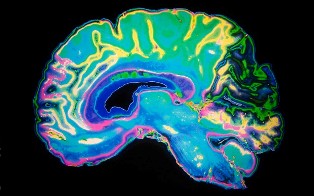
LONDON: The scientists have discovered the causes of Alzheimer’s as a poisonous toxin found in freshwater lakes and reservoirs across Britain, which could be the main reason of fuelling the country’s dementia epidemic, Daily Mail reported.

Researchers have found the first direct evidence that a chemical, produced by algae, might be linked to a range of devastating neurological conditions including Alzheimer’s and Motor Neurone Disease (MND).


You might also like

Tesla driverless system to use updated radar technology

12/09/2016

Apple to develop its own self-driving technology

10/09/2016

The toxin – sometimes a by-product of increasingly common blue-green algal bloom – has been found in seafood and plants, through which it is feared it enters the food chain.

Now experts have highlighted a growing body of evidence suggesting the toxin, called BMAA, could trigger brain disease in humans.

If the link is confirmed, the chemical would be the first major environmental factor linked to increasing rates of Alzheimer’s, which is predicted to affect more than one million Britons by 2050.

The latest research, revealed to The Mail on Sunday, shows:

  • Monkeys given a diet rich in BMAA developed an ‘Alzheimer’s-like illness’ after less than five months;
  • The brains of people who have suffered from Alzheimer’s and MND have been found to contain high levels of the compound, whereas those of healthy people do not;
  • High levels of dietary BMAA has been linked to astonishing rates of a neurodegenerative illness on the Pacific island of Guam;
  • Scientists in the US and France have spotted ‘clusters’ of rare MND in those living around lakes and lagoons contaminated with algal BMAA.

Although the link to the food chain has yet to be established, seafood including French mussels and oysters, and Portuguese cockles grown in estuaries have all been found to contain BMAA.

The toxin appears to be widespread in British inland waters, with blue-green algae samples from 12 freshwater lakes and reservoirs across England, Scotland and Wales testing positive.


Related Stories

Tesla driverless system to use updated radar technology

byCT Report
12/09/2016

WASHINGTON: Electric carmaker Tesla announced Sunday it was upgrading its Autopilot software to use more advanced radar technology. In a...

Apple to develop its own self-driving technology

byCT Report
10/09/2016

SAN FRANCISCO: Apple may not become an automaker, but it still wants to develop its own self-driving technology. The iPhone-maker's...

NASA spots slowest known magnetar

byCT Report
10/09/2016

WASHINGTON: Astronomers have found evidence of a magnetar - magnetised neutron star - that spins much slower than the slowest...

‘YouTubers’ outshining old-school television

byCT Report
09/08/2016

SAN FRANCISCO: A media revolution is taking place, and most people over 35 years of age aren’t tuned in. Millennial...

Next Post

Blue Origin rocket successfully lands back second time

  • Terms and Conditions
  • Disclaimer

© 2011 Customs Today -World's first newspaper on customs. Customs Today.

No Result
View All Result
  • Transfers and Postings
  • Latest News
  • Karachi
  • Islamabad
  • Lahore
  • National
  • Chambers & Associations
  • Business
  • About Us

© 2011 Customs Today -World's first newspaper on customs. Customs Today.