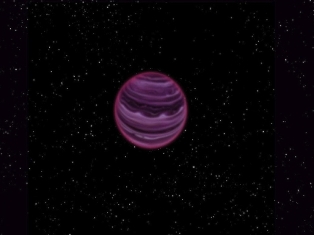
LONDON: Scientists have for the first time unveiled weather patterns in a mysterious sunless world beyond our solar system which is 75 light years from Earth, an advance that could help find habitable exoplanets.
Layers of clouds, made up of hot dust and droplets of molten iron, have been detected on the planet-like world, researchers said.


Findings from the study could improve scientists’ ability to find out if conditions in far-off planets are capable of sustaining life, they said.
A team led by the University of Edinburgh researchers used a telescope in Chile to study the weather systems in the distant world – known as PSO J318.5-22 – which is estimated to be around 20 million-years-old.
Researchers captured hundreds of infra-red images of the object as it rotated over a 5-hour period. By comparing the brightness of PSO J318.5-22 with neighbouring bodies, the team discovered that it is covered in multiple layers of thick and thin cloud.
These cause changes to the brightness of the distant world as it rotates, researchers said.
The far-off world is around the same size as Jupiter – the largest planet in our solar system – but is roughly eight times more massive. Temperatures inside clouds on PSO J318.5-22 exceed 800 degrees Celsius.