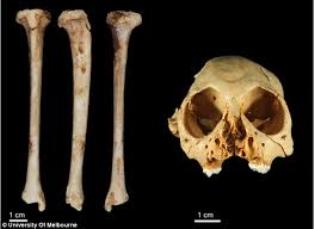


BRENT: Scientists have found a fossil of a monkey in an underwater cave – and estimate it may have been down there for at least a million years.
Researchers hope that the dating process can establish the story of what happened to the primate, known as Antillothrix bernensis, which lived in the Dominican Republic.
The monkey seems to have lived mostly unchanged on the island for at least a million years, according to the findings reported in the Journal of Human Evolution. It then disappeared in the 16th century.
The shin bone, or tibia, was found fossilised in a flooded cave. Scientists were able to date it by studying the different uranium, thorium and lead that were present in the rocks that it was stuck in and looking at the way that they decayed.
It then used extra techniques to establish that the monkey was a Antillothrix bernensis. That primate was about the size of a small cat, lived in trees and ate mostly fruit and leaves.
Finding out when and how those monkeys arrived could be central to figuring out the mystery of how such a wide array of different animals made it into the Caribbean islands. That question has troubled biologists since the days of Darwin, according to the researchers on the new paper.
“The presence of endemic new world monkeys on the Caribbean islands is one the great questions of bio-geography and our work on these fossils shows Antillothrix existed on Hispaniola relatively morphologically unchanged for over a million years” said Helen Green, a lead researcher who works on dating the limestone around the fossils.
“By establishing the age of these fossils we have changed the understanding of primate evolution in this region.”
Now scientists have established the origin and age of the bone, they can also use it to understand more about the animal itself.

Karachi Port sets 138-year cargo handling record
KARACHI: Pakistan's maritime sector has achieved a major milestone as Karachi Port set a new record in its 138-year history...