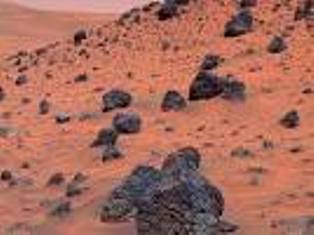
BRENT: According to scientists, rocks on Mars have shown signs of having been dissolved, with the most probable culprit being an acid fog formed by vapors from volcanoes. They said that scarce, thin water vapor may be combining with the acidic gases from the volcanoes for forming a corrosive fog hugging the rocks on the shaded side of hills.
There is a similar phenomenon that takes place on Earth with so-called Hawaiian ‘vog’, which is corrosive volcanic smog that results into gases emitted from the Kilauea volcano.


Planetary scientist Ralph Milliken of Brown University said that many people have talked about weathering that would occur on Mars, although he has noted that such kind of erosion would take millions of years in the thin, dry atmosphere of the Red Planet.
Latest research by planetary scientist Shoshanna Cole at Ithaca College in New York is supportive of such a hypothesis.
Cole used data gathered by the now-defunct NASA Spirit rover for supporting the possibility that acidic vapors formed a thin dissolved layer of rock ‘soup’ on Martian rocks’ surface, and changed their surface appearance.
She said, “In this alteration scenario, acid fog condensed on the outcrop surfaces, dissolving material at the condensation-surface interface and forming a gel, which desiccated as the adsorbed water evaporated”.