

Customs Today
  • Home
  • Islamabad
  • Karachi
  • Lahore
  • National
  • Transfers and Postings
  • Chambers & Associations
  • Business
No Result
View All Result
Customs Today
  • Home
  • Islamabad
  • Karachi
  • Lahore
  • National
  • Transfers and Postings
  • Chambers & Associations
  • Business
No Result
View All Result
Customs Today
No Result
View All Result
Home Science & Technology Science

Scientists found evidence of an intense cloud of dust orbiting the moon

byCustoms Today Report
20/06/2015
in Science, Science & Technology
Share on FacebookShare on Twitter

You might also like

Tesla driverless system to use updated radar technology

12/09/2016

Apple to develop its own self-driving technology

10/09/2016

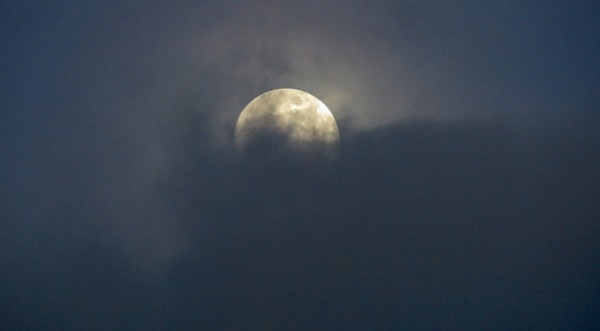
LONDON: In a new study, published in Nature International Weekly Journal of Science on Wednesday, scientists from the University of Colorado-Boulder, have found new evidence of an intense cloud of dust orbiting the moon.
The scientists claim that this cloud of dust is a result of small, but extremely fast, comet dust particles colliding with the moon. These particles are believed to be travelling at thousands of miles per hour in a clockwise orbit around the sun, in contrast to the planetary motion that takes place anticlockwise.
It was in 1960 that the first evidence of these dust clouds came from a mission captured by NASA. NASA’s cameras on board an unmanned spacecraft, shot a bright glow during the lunar sunsets, wherein these particles were witnessed.
This time again, NASA’s spacecraft called Lunar Atmosphere and Dust Environment Explorer (LADEE), which was launched in September of 2013, has collected data from the moon’s surface. In fact, in its 80-day orbit around the moon, LADEE has recorded 140,000 impacts from dust on the moon’s surface.
These dust particles are not unique to the moon. They are also orbiting the Earth. However, the Earth has an atmosphere, which keeps the dust particles away from its surface. Whereas, the moon, in the absence of such atmosphere, has no barrier to block these particles.
Scientists opined that these particles could pose a problem for future space travel to the moon, more so if such travel is planned for a longer duration. These particles might act like sandblasting over time, to the surface of the spacecraft.

Related Stories

Tesla driverless system to use updated radar technology

byCT Report
12/09/2016

WASHINGTON: Electric carmaker Tesla announced Sunday it was upgrading its Autopilot software to use more advanced radar technology. In a...

Apple to develop its own self-driving technology

byCT Report
10/09/2016

SAN FRANCISCO: Apple may not become an automaker, but it still wants to develop its own self-driving technology. The iPhone-maker's...

NASA spots slowest known magnetar

byCT Report
10/09/2016

WASHINGTON: Astronomers have found evidence of a magnetar - magnetised neutron star - that spins much slower than the slowest...

‘YouTubers’ outshining old-school television

byCT Report
09/08/2016

SAN FRANCISCO: A media revolution is taking place, and most people over 35 years of age aren’t tuned in. Millennial...

Next Post

Mars sized planet has been orbiting red dwarf star about 200 light years from our solar system

  • Terms and Conditions
  • Disclaimer

© 2011 Customs Today -World's first newspaper on customs. Customs Today.

No Result
View All Result
  • Transfers and Postings
  • Latest News
  • Karachi
  • Islamabad
  • Lahore
  • National
  • Chambers & Associations
  • Business
  • About Us

© 2011 Customs Today -World's first newspaper on customs. Customs Today.