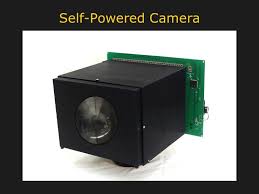
NEW YORK: Scientists have introduced the world’s first self-powered camera that generates electricity using ambient light in a well-lit room.
The resolution is low it can produce one image per second but it can, according to its designers, record video and images forever.
You might also like


Scroll down for video
The research team, led by Professor Shree Nayar at Columbia Engineering, said the camera works by not only measuring light but also convert that light into electric power.
It took its inspiration from solar panels. While digital cameras and solar panels have different purposes both are constructed from essentially the same components.
At the heart of any digital camera is an image sensor, a chip with millions of pixels.
The key enabling device in a pixel is the photodiode, which produces an electric current when exposed to light.
This mechanism allows each pixel to measure the intensity of light falling on it.
The same photodiode is also used in solar panels to convert light to electric power.
The photodiode in a camera pixel is used in the photoconductive mode, while in a solar cell it is used in the photovoltaic model.
Using off-the-shelf components, the team managed to create an image sensor with 30×40 pixels.