LONDON: Scientists from the University of Washington (UW) were able to refrigerate water using laser for the first time ever.
Since laser was first developed in 1960, it almost always emitted heat either via actual helpful tools or via fictional devices that help heroes fight off space enemies, as in “Star Wars.”


Laser was never regarded as a cooling medium, but in a new study conducted by UW researchers, the first ever evidence pertaining to laser’s cooling abilities under actual world conditions has finally surfaced.
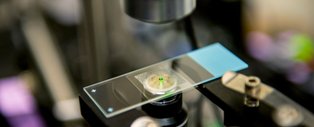
The scientists performed the experiments by utilizing infrared laser light to cool water to approximately 36 degrees Fahrenheit. The research team chose infrared laser light due to its biological application purposes. For example, if visible light is used, it could impair cells and cause a sunburn-like effect.
They lighted up a single microscopic crystal appended in water with infrared to induce a one-of-a-kind type of radiance that has a little more energy compared to the light absorbed.
The glow that has the higher energy drives heat away from both the water and crystal that surrounds it. With this, the authors were able to showcase that laser could refrigerate salt and water solution and cell culture media that are typically employed in molecular and genetic studies.
Normally, developing laser crystals entails costly processes that necessitates a significant amount of time and financial resources, just to come up with a single gram of object. In the UW experiment, the researchers were able to demonstrate that a low-cost hydrothermal approach can be employed to create a famous laser crystal for laser refrigeration more rapidly and in a measurable and cost-effective manner.