


Customs Today
  • Home
  • Islamabad
  • Karachi
  • Lahore
  • National
  • Transfers and Postings
  • Chambers & Associations
  • Business
No Result
View All Result
Customs Today
  • Home
  • Islamabad
  • Karachi
  • Lahore
  • National
  • Transfers and Postings
  • Chambers & Associations
  • Business
No Result
View All Result
Customs Today
No Result
View All Result
Home Science & Technology Science

Scientists restore lost memory in mice, shedding light on amnesia

byCustoms Today Report
02/06/2015
in Science, Science & Technology
Share on FacebookShare on Twitter

You might also like

Tesla driverless system to use updated radar technology

12/09/2016

Apple to develop its own self-driving technology

10/09/2016

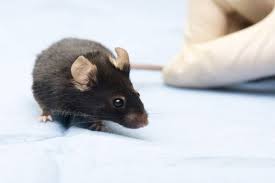
NEW YORK: According to researchers, “lost” memories can be found again — in mice, anyway.A new study, published in the journal Science, details how researchers were able to reactivate suppressed memories. This shows that memories lost after brain trauma, or retrograde amnesia, could be just a case of memory retrieval issues than the physical loss of a memory, writes The Washington Post.
The researchers used optogenetics to make this discovery. Using this process, scientists pick specific neurons and introduce a special protein to them through an engineered virus. Once the protein has been introduced to brain cells, the cells become sensitive to blue light, allowing researchers to control the on and off switch for particular neurons.
In order to test their theory, researchers created bad memories within mice by shocking the mice multiple times while they were within one particular enclosure. They then selected the neurons stimulated when the mice had to relive the memory, which was done by presenting them to the ‘shock enclosure’. The selected neurons, collectively known as a “memory engram,” were engineered to be light sensitive in a new set of mice. These mice were then trained with the same shock therapy to create bad memories.
The scientists then engineered the effects of retrograde amnesia in these mice. Some mice were injected with a drug, called anisomycin, that tampers with the formation of memory. As predicted, the mice ceased to be afraid of the shock enclosure. Their fear response returned when researchers used the blue light to activate the neurons holding the repressed memory.

Related Stories

Tesla driverless system to use updated radar technology

byCT Report
12/09/2016

WASHINGTON: Electric carmaker Tesla announced Sunday it was upgrading its Autopilot software to use more advanced radar technology. In a...

Apple to develop its own self-driving technology

byCT Report
10/09/2016

SAN FRANCISCO: Apple may not become an automaker, but it still wants to develop its own self-driving technology. The iPhone-maker's...

NASA spots slowest known magnetar

byCT Report
10/09/2016

WASHINGTON: Astronomers have found evidence of a magnetar - magnetised neutron star - that spins much slower than the slowest...

‘YouTubers’ outshining old-school television

byCT Report
09/08/2016

SAN FRANCISCO: A media revolution is taking place, and most people over 35 years of age aren’t tuned in. Millennial...

Next Post

In next century, glaciers in Nepal’s Dudh Koshi basin could shrink by more than 70%

  • Terms and Conditions
  • Disclaimer

© 2011 Customs Today -World's first newspaper on customs. Customs Today.

No Result
View All Result
  • Transfers and Postings
  • Latest News
  • Karachi
  • Islamabad
  • Lahore
  • National
  • Chambers & Associations
  • Business
  • About Us

© 2011 Customs Today -World's first newspaper on customs. Customs Today.
