HONG KONG: Scientists since long have been trying to find a way to grow crops in space. But now Queensland scientists claimed that they have solved an evolutionary riddle spanning 750,000 years which could help find answer on how to grow crops in space.
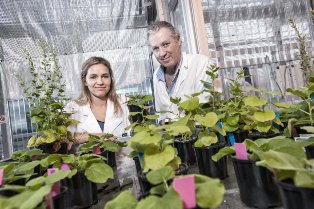
Professor Peter Waterhouse and Dr Julia Bally from Queensland University of Technology said they have discovered that the Australian native tobacco plant, also known as Pitjuri, had thrown out its immune system in favor of rapid reproduction and over-sized seeds.


Furthermore, in order to find how the plant achieved this unique adaption, the scientists mapped the gene fault that turned off the plant’s immune system. They said this discovery could play a major role to open an entirely new world of research in medicine and food production.
Professor Waterhouse said the Pitjuri plant is extraordinary and the absence of an immune system makes it the perfect subject for experiments.
“They got this gene that’s been switched off and this is giving these magical properties. It just has fabulous property of taking a gene in from virtually everywhere and it accepts it and it expresses it so it rapidly, speeds up research”, he said.
As per experts, the same plant was recently used to develop vaccine for the Ebola virus. Pitjuri found in deserts where immune system is not that important, they said. The scientists, so far, have sequenced the Pitjuri plant’s genome, and now they are keen to test their discovery with other plants.
Professor Waterhouse said it will be interesting to see what a plant will do if it is given such a bigger boost of energy which it can spend in any way it likes.