

Customs Today
  • Home
  • Islamabad
  • Karachi
  • Lahore
  • National
  • Transfers and Postings
  • Chambers & Associations
  • Business
No Result
View All Result
Customs Today
  • Home
  • Islamabad
  • Karachi
  • Lahore
  • National
  • Transfers and Postings
  • Chambers & Associations
  • Business
No Result
View All Result
Customs Today
No Result
View All Result
Home Science & Technology Science

Scientists uncovered the smallest supermassive black hole

byCustoms Today Report
15/08/2015
in Science, Science & Technology
Share on FacebookShare on Twitter

You might also like

Tesla driverless system to use updated radar technology

12/09/2016

Apple to develop its own self-driving technology

10/09/2016

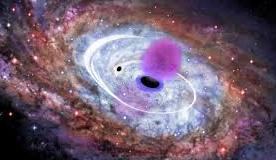
CANADA: Thanks to data from the Sloan Digital Sky Survey, NASA’s X-Ray Observatory and the Clay Telescope in Chile, scientists have uncovered the smallest supermassive black hole to ever be found in the center of a galaxy.
Most surprising, though, is that this small supermassive black hole operates a lot like its larger counterparts, such as the supermassive black hole in the center of the Milky Way.
So, how small is this new supermassive black hole? It only has the mass of around 50,000 times of our sun, which makes it 100 times less massive than the supermassive black hole within the middle of our galaxy. Of course, when it comes to supermassive black holes, the word “small” is a relative term.
“It might sound contradictory, but finding such a small, large black hole is very important,” says Vivienne Baldassare, one of the authors of the study announcing the discovery. “We can use observations of the lightest supermassive black holes to better understand how black holes of different sizes grow.”
This small supermassive black hole sits in the center of RGG 118, a dwarf galaxy about 340 million light-years from Earth. Scientists initially spotted it using data from the Sloan Digital Sky Survey and then used the Clay Telescope and data from Chandra to estimate its mass and study the brightness of the gas swirling around it. This led to the discovery that the pressure of the gas’ radiation accounts for about one percent of the black hole’s gravitational pull, which means that, although this supermassive black hole is small, it operates similarly to other supermassive black holes.

Related Stories

Tesla driverless system to use updated radar technology

byCT Report
12/09/2016

WASHINGTON: Electric carmaker Tesla announced Sunday it was upgrading its Autopilot software to use more advanced radar technology. In a...

Apple to develop its own self-driving technology

byCT Report
10/09/2016

SAN FRANCISCO: Apple may not become an automaker, but it still wants to develop its own self-driving technology. The iPhone-maker's...

NASA spots slowest known magnetar

byCT Report
10/09/2016

WASHINGTON: Astronomers have found evidence of a magnetar - magnetised neutron star - that spins much slower than the slowest...

‘YouTubers’ outshining old-school television

byCT Report
09/08/2016

SAN FRANCISCO: A media revolution is taking place, and most people over 35 years of age aren’t tuned in. Millennial...

Next Post

Stork will soon makes a special delivery to ISS

  • Terms and Conditions
  • Disclaimer

© 2011 Customs Today -World's first newspaper on customs. Customs Today.

No Result
View All Result
  • Transfers and Postings
  • Latest News
  • Karachi
  • Islamabad
  • Lahore
  • National
  • Chambers & Associations
  • Business
  • About Us

© 2011 Customs Today -World's first newspaper on customs. Customs Today.