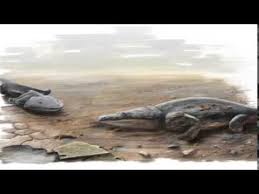


CANADA: Paleontologists from the University of Edinburgh found flossils of a so-called “super salamander” in southern Portugal, at a site where there had once been a lake. The predator species, Metoposaurus algarvensis, could reach up to six feet in length and lived about 220 million years ago.
Scientists believe the amphibian lived in lakes and rivers and ate a diet consisting primarily of fish. The species, which had hundreds of teeth, was a predator while dinosaurs were still evolving. The findings are described in the latest issue of the the Journal of Vertebrate Paleontology.
Metoposaurus algarvensis, now extinct, is an ancestor to modern amphibians, including frogs. There’s one feature it didn’t pass on, though — the species’ head was shaped like a toilet seat, which it could clamp around its prey.
The researchers believe the Metoposaurus algarvensis became extinct after its lake habitat dried up. They noted that the discovery establishes that ancient amphibians lived in an area much more diverse than scientists previously believed.

Karachi Port sets 138-year cargo handling record
KARACHI: Pakistan's maritime sector has achieved a major milestone as Karachi Port set a new record in its 138-year history...