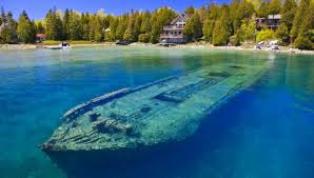


LANGA: A group of scientists have started to use 3D imaging to further understand the historical details of the shipwrecks found deep within the Lake Huron in the U.S. More than 1,000 shipwrecks are said to be found there and with the new technology, the scientists are hoping to come up with exquisite pictures that are more detailed than any other conventional camera or video can generate.
For the highlight of the project, the team of scientists trek down to the Defiance, which is a schooner that measures approximately 110 feet. The said voyage submerged deep within the waters in 1854 and currently lies 200 feet beneath the water surface. Soon after Joey Hoyt, the diver in-charge of the mission, set out on his dive, he was able to take 3D images and just minutes after he returned to the office, he found himself reviewing numerous images. According to the team, the Defiance was preserved well, with its deck and cabins still unimpaired.
Over the past years, scientists have been trying to capture photos and videos of the shipwrecks but have felt short in terms of getting accurate images in a cheap and rapid manner, especially because of limited funding and time constraints that 130-feet dives require. With the new images collated and subjected to the new technology called photogrammetry, the scientists will now be able to evaluate and oversee in a detailed manner precise changes.
“This is the first project we’ve really rolled it out on,” said Hoyt. What’s cool about this emergent, sophisticated technology is its ability to not only provide realistic images but a perfect 3D capture as well, allowing investigators to see all its sides. With its perfectly-scaled property and the short time required for processing, this technique is an amazing and accurate tool to assess and monitor the shipwrecks, added Hoyt.

Karachi Port sets 138-year cargo handling record
KARACHI: Pakistan's maritime sector has achieved a major milestone as Karachi Port set a new record in its 138-year history...