

Customs Today
  • Home
  • Islamabad
  • Karachi
  • Lahore
  • National
  • Transfers and Postings
  • Chambers & Associations
  • Business
No Result
View All Result
Customs Today
  • Home
  • Islamabad
  • Karachi
  • Lahore
  • National
  • Transfers and Postings
  • Chambers & Associations
  • Business
No Result
View All Result
Customs Today
No Result
View All Result
Home Science & Technology Science

Scott Kelly spends 172 days on space

byCustoms Today Report
18/09/2015
in Science, Science & Technology
Share on FacebookShare on Twitter

You might also like

Tesla driverless system to use updated radar technology

12/09/2016

Apple to develop its own self-driving technology

10/09/2016

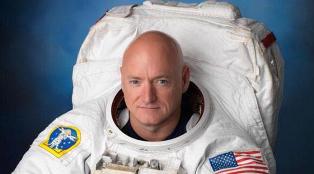
HONG KONG: Scott Kelly has been in space for 172 days. Right now, as you read these words, he’s orbiting Earth in the International Space Station, as a participant in the first international One Year Mission with cosmonaut Mikhail Kornienko — the goal of which is to study the effects of life in space on the human body in a slew of experiments.
Scott’s identical twin brother, fellow astronaut, and former NASA Commander Mark has been living comfortably on Earth during that same time. Since Mark and Scott are the same age, same fitness level, and have identical genetics, they make the perfect test subjects for studies on human physiology, behavioral health, microbiome and molecular continuity. They form the center of NASA’s Twin Study.
On Tuesday, September 15, 2015 C-SPAN2 aired a National Press Club discussion. Mark Kelly talked about the ongoing research and his brother fielded questions from the ISS via video link.
John Hughes, National Press Club President asked Scott how he was doing: “How do you feel, what effects have microgravity had on you so far during this almost six month period?”
Scott said, “As far as physically, I feel good, we have some pretty good exercise equipment up here, but there are a lot of effects of this environment that we can’t see or feel, bone loss, effects on our vision, our genetics, DNA, RNA and proteins, and that’s why we’re studying this.”

Related Stories

Tesla driverless system to use updated radar technology

byCT Report
12/09/2016

WASHINGTON: Electric carmaker Tesla announced Sunday it was upgrading its Autopilot software to use more advanced radar technology. In a...

Apple to develop its own self-driving technology

byCT Report
10/09/2016

SAN FRANCISCO: Apple may not become an automaker, but it still wants to develop its own self-driving technology. The iPhone-maker's...

NASA spots slowest known magnetar

byCT Report
10/09/2016

WASHINGTON: Astronomers have found evidence of a magnetar - magnetised neutron star - that spins much slower than the slowest...

‘YouTubers’ outshining old-school television

byCT Report
09/08/2016

SAN FRANCISCO: A media revolution is taking place, and most people over 35 years of age aren’t tuned in. Millennial...

Next Post

Scientists discovered species of deadly ‘death adder' snakes in Australia

  • Terms and Conditions
  • Disclaimer

© 2011 Customs Today -World's first newspaper on customs. Customs Today.

No Result
View All Result
  • Transfers and Postings
  • Latest News
  • Karachi
  • Islamabad
  • Lahore
  • National
  • Chambers & Associations
  • Business
  • About Us

© 2011 Customs Today -World's first newspaper on customs. Customs Today.