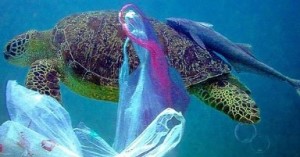


LONDON: Researchers at Plymouth Marine Laboratory, North Carolina Wildlife Resources Commission, North Carolina State University, Duke University Marine Lab and James Cook University, led a joint research to study the hazards of marine plastic pollution. Their study stresses on serious knowledge gaps in the diverse and complex pathways showing increasing impact of plastic pollution on lives of marine turtles. Researchers at the University of Exeter found that plastic pollution is seriously affecting the lives of all seven species of marine turtles.
Sarah Nelms, from the Centre for Ecology and Conservation at the University of Exeter’s Penryn campus, said that there is urgent need to have more research in order to understand the scale of the problem. According to sources, annual global plastic production has grown from 1.5 million tons to 299 million tons in the last 65 years. Plastic pollution is affecting lives of turtles in a way it causes intestinal blockage when ingested by turtles. It further causes malnutrition, poor health, reduced growth rates, lower reproductive output and even death in worse conditions.
Prof. Brendan Godley, lead researcher, said “It is sobering to think that almost every piece of plastic that ever entered the sea is still there; breaking down and forming a vast soup of microplastics that could have frightening long-term repercussions”. There is vital need to take urgent action to better understand the effects of plastic pollution on lives of marine turtle so that effective migrations steps should be developed to protect these tiny creatures.

Karachi Port sets 138-year cargo handling record
KARACHI: Pakistan's maritime sector has achieved a major milestone as Karachi Port set a new record in its 138-year history...