
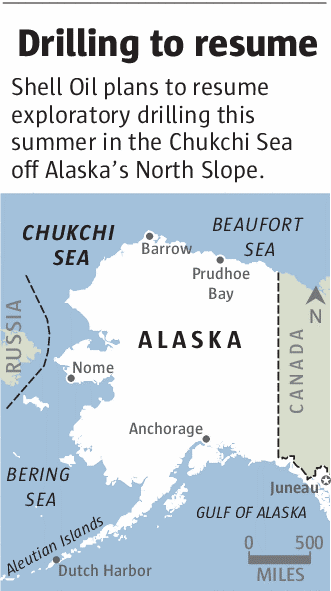
LONDON: Shell Oil Chief Executive Van Beurden has said that the company has planned to resume drilling off Alaska’s North Slope this summer, however, Shell would have to obtain required permits, clear legal challenges and prepare technically and logistically before drilling procedure.
He said, “So, will we go ahead? Yes, if we can … I’d be so disappointed if we wouldn’t … We’ve been working on this for a long period of time.”


Seattle would play a significant role in Shell’s exploration, with eight vessels berthed at the now vacant Terminal 5 under a two-year lease agreement that the Port of Seattle is now negotiating with Foss Maritime.
The agreement is opposed by environmentalists, who have threatened to file a lawsuit should the Port move forward with the lease. Environmental groups have long fought offshore-exploratory drilling, warning it could result in a major Arctic oil spill.
Shell first drilled in Arctic waters in the 1980s, before abandoning the test holes during a period of low oil prices.
In 2012, when Shell prepared to resume oil exploration off Alaska’s Arctic, the company used shipyards in the Pacific Northwest to refurbish an oil rig and for other work. Maritime-industry officials hoped this might mark the start of a prosperous new chapter in Seattle’s waterfront. Shell has had plenty of things go wrong in the restart of its offshore-oil exploration in Alaska.
A drill rig – the Kulluk – went aground off Kodiak Island in south central Alaska after breaking tow lines during a December 2012 return voyage from the Arctic.
Noble Drilling, the Shell contractor, which operated the drill ship Noble Discoverer, last month pleaded guilty in US District Court to eight felony counts and was fined $12.2 million for safety and environmental crimes related to the 2012 drilling season.
Shell in 2015 expects to spend more than $1 billion exploring for oil off Alaska, according to Shell Chief Financial Officer Simon Henry. He spoke Thursday in London as fourth-quarter earnings were released.
Federal estimates of the potential oil reserves in the Beaufort and Chukchi seas off Alaska’s North Slope indicate there could be 25 billion barrels there, a greater amount than the crude produced at the giant Prudhoe Bay field during the past 30 years.