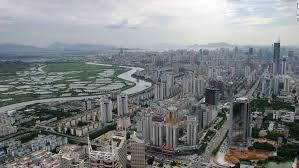
HONG KONG: Singapore investors will have easier access to China’s vibrant technology and consumer sectors now that the stock-trading link between Shenzhen and Hong Kong is up and running.
The Shenzhen-Hong Kong Stock Connect, which officially kicks off today after months of market anticipation, creates mutual stock-exchange access between Hong Kong and Shenzhen. The scheme is modelled after the Shanghai-Hong Kong Stock Connect, launched in 2014. Before these schemes became a reality, trading mainland shares was possible for foreigners, but the process was laden with limitations on trading quotas and available stocks.


With the new trading link, foreign investors – including those in Singapore – can trade shares of up to 881 companies listed on the Shenzhen Stock Exchange through counterparty brokers in Hong Kong.
And there are plenty of exciting choices on offer, said Mr Sunil Hiranandani, HSBC Singapore’s senior vice-president for yuan internationalisation.
“With a market capitalisation of US$3.3 trillion (S$4.7 trillion) and an average daily turnover of over US$60 billion, the Shenzhen Stock Exchange is the most active stock market in China. Over half are in sectors that represent the new growth engine of the economy, such as technology, consumer discretionary and healthcare,” he told The Straits Times.
Around half of Shenzhen’s market cap is in these three growth sectors, compared with just 18 per cent on the Shanghai Stock Exchange, noted Bank of Singapore equity research head Sean Quek, who added that 75 per cent of Shenzhen-listed firms are not state-owned enterprises.
HSBC’s top Shenzhen picks include Wanda Cinema Line, Hikvision, Wangsu Science and Technology and Wuliangye Yibin.
Wuliangye Yibin is the second-largest Chinese spirits company, with annual sales of 21 billion yuan (S$4.3 billion). Wangsu Science and Technology is the country’s biggest content delivery network service provider, supporting Internet infrastructure. Its share of the market is said to be around 50 per cent.
Wanda Cinema Line is favoured for its dominance in the cinema business in China – for the first nine months of this year, it generated 29 per cent year-on-year growth in box office revenue, against the industry average of 8 per cent.
Those who decide to explore the Chinese market now will find what is likely to be a stabilising economic landscape.
“With a critical political succession in 2017, we believe the government will continue to maintain infrastructure investment growth at an accelerating pace, to ensure economic growth will be above 6.5 per cent,” said Greater China equities head Nicole Yuen at Credit Suisse.
This should benefit not just mainland shares but also Hong Kong-listed Chinese firms, she added. Credit Suisse has upgraded its earnings-per-share forecast for the Hang Seng China Enterprises Index for next year from 3 per cent to 6 per cent.
But a depreciating yuan might be something that investors need to take note of – the Chinese currency sank to an eight-year low against the United States dollar last month.
Credit Suisse believes there is still room for gradual depreciation of the yuan to 7.30 against the greenback by the end of next year.
Mr Quek said: “Yuan depreciation would affect companies with higher revenue or debt exposure in foreign currencies. This is because of the translation effects, where foreign revenue is worth less or higher interest costs are incurred as a result of the depreciating Chinese currency.
“Correspondingly, stocks with these factors, such as airlines, are likely to be more affected.” Still, the Shenzhen stock market has shown significant resilience against the sliding yuan.
Data collected by HSBC shows that, over the past seven rounds of depreciation since 2010, the Shenzhen Composite Index has dipped by an average of 1.6 per cent only – the lowest across all Greater China indexes, including the Hang Seng.