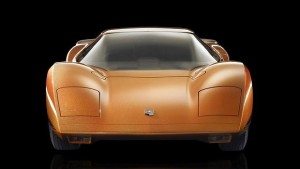
VICTORIA: Shifting Gear Exhibition kicked off. Over 60,000 people attended the exhibition yet. Shifting Gear offers ready testimony to the collaborative process. Beyond a simple populist show for revheads, RMIT Design Archive’s Harriet Edquist guest curates an almost elegiac exhibition. Yet this paean to a dying domestic industry carries a note of optimism. A tribute to local ingenuity, it’s also the story of international reciprocal exchange. We may not be exporting cars, but we continue to export design knowledge.
Among the highlights are a dedicated design space at the front of the Federation Square atrium that will host four exhibitions a year, a triennial of art and design beginning in 2017, and a range of monthly programs including May’s guest speaker Charles Renfro, who worked on New York’s heavily hyped Highline project.


Corralling the cross-disciplinary “slippage” (Ellwood’s term) will be the newly appointed senior curator Ewan McEoin and curator Simone LeAmon.
“We want to reflect the way the design industry actually works, which is very collaborative,” says McEoin. “It’s not a set of discreet disciplines that are doing their little bit, it’s actually a whole sector reacting to real concerns in the world.”
Design has, of course, always been a part of the museum collection. Furniture and industrial design could be found in the Decorative Arts department. Fashion with Textiles, while Prints and Drawings accommodates graphic design. Now the new department will collect everything design-related that’s created after 1980. (The year aligns with the gallery’s carbon dating of contemporary art.) These acquisitions and bigger project exhibitions will be shown primarily within its Contemporary Art and Design gallery at NGV International.
Simply showcasing the latest slick products doesn’t interest McEoin. “We’re more interested in exploring the role of design in shaping our future,” says the former creative director of Victoria’s State of Design festival and overseer of Melbourne Now’s design component. “This might include disruptive products like the iPhone that change the way we do a lot of things.” More likely it will examine design in terms of such areas as biomimicry, food production and health.
Questioning the role of design itself also plays on the agenda. “Do all designers need to be designing for mass production?” McEoin asks. “What’s the potential for more art-based design practice?”
Just as Gehry helped design the art of the motorcycle display, architects and designers will form part of the collaborative process at the NGV. “That forward-thinking museological practice is what we’re trying to do,” says Ellwood.
Not only does the NGV team local designers with its exceptional in-house exhibition designers, a new initiative “Ephemeral Architecture” invites designers and architects to produce a piece in the gallery’s back garden. John Wardle inaugurates the annual commission this September with I Dips Me Lid, inspired by both C.J. Dennis and the Myer Music Bowl. Ellwood doesn’t perceive any duplication of Naomi Milgrom’s annual MPavilion program nearby.
Other opportunities lie with local designers and artists collaborating with the gallery’s redesigned bookshop. Rebranded as a “design store” the gallery has begun commissioning products from such local designers as Romance is Born, Spacecraft studio and artist Emily Floyd.
“What we learned from Melbourne Now is that so many great designers in our community are acknowledged internationally, but don’t have their practice reflected in their own cities,” says Ellwood. “That’s what we should be doing.”