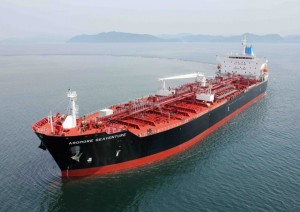
CANBERRA: In a move that winds back Labor laws that forced shipping companies to pay local wages to foreign seafarers carrying domestic freight between Australian ports, Infrastructure Minister Warren Truss will outline changes that mean the laws will apply only to ships that spend most of their time trading in Australian waters.
Mr Truss will tell a Shipping Australia lunch that if Australia could use “just a fraction” of the capacity of foreign ships that visit our shores, there would be a “major difference” to the efficiency of sea freight.
You might also like


Vowing to fix Labor’s “failed” coastal shipping laws, which critics said drove up prices and reduced shipping options, he will pitch the reforms as allowing cheaper freight, “all of which make Australian products more competitive internationally and domestically, saving jobs and creating more”.
“We will deliver cheaper freight costs for businesses and greater choice between shipping companies, which will lead to better services being provided to Australian industry,” he will say.
Today’s move marks the first time the reforms have been spelled out and follows lengthy consultations.
As revealed in The Australian last week, Mr Truss will confirm that more foreign ships will be able to skirt the local wage laws.
Under the changes, Labor’s Fair Work Act and “part B” of the Seagoing Industry Award will apply only where foreign ships are in Australia’s coastal waters for more than 183 days a year.
This is in contrast to Labor-era measures that meant the award applied to foreign ships that did more than two yearly trips on the domestic route.
Mr Truss will insist that there be built-in protections so that the “appropriate” wages and conditions are paid to mariners on foreign ships that are primarily plying Australia’s coastal route, while all ships will have to comply with environmental and safety provisions.
The foreign ships spending most of their time in Australian waters will also have to employ an Australian or someone with Australian work rights to the posts of master or chief mate and chief or first engineer.
Under the changes to be detailed today, a “complicated” licensing system would be replaced by a single 12-month permit for all Australian and foreign ships operating along the coast.
Vessels with a permit will be protected from Customs “importation”, a move designed to allow local repair and dry-dock facilities to carry out maintenance.
As well, requirements for vessels on the “second register” to reach a collective agreement with the union will be scrapped. This register was set up by Labor for Australian shipowners doing international work.
Legislation for the reforms is being drafted and will be introduced before the end of the current parliamentary sittings.
After the election, the Coalition indicated it would unwind parts of Labor’s crackdown on cheaper foreign ships. In anticipation of Mr Truss’s speech, opposition transport spokesman Anthony Albanese said the plans were an attack on the Australian shipping industry that would reduce wages and conditions of maritime workers. “This is Work Choices on Water,” he said.