
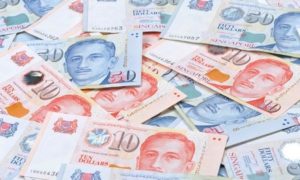
SINGAPORE: The Singapore dollar may have recovered some lost ground after hitting multi-year lows against the greenback last week, but this momentum is unlikely to be sustainable when the new year comes around, analysts told Channel NewsAsia. Alongside most of the regional currencies, the Sing dollar has been on the back foot since Donald Trump’s surprise victory in the US presidential election shook the greenback out of a slump. Compounded by the US Federal Reserve’s decision to raise interest rates earlier this month, the local currency fell to 1.4509 versus the US dollar on Dec 22, hitting its weakest level since August 2009. The Sing dollar has since made mild gains and was last seen fluctuating between 1.4463 and 1.4497 on Tuesday (Dec 27).
However, market analysts said the greenback’s resurgence looks set to continue in 2017 on the back of expectations for a stronger economic recovery in the US and as the Fed flagged a faster-than-expected pace of rate hikes. That could deal Asian currencies a further blow. “With further upside for the US dollar in 2017, we expect more weakening for the Sing dollar and in fact, weaker Asian currencies across the board with no exceptions,” ANZ’s senior FX strategist, Irene Cheung, said.


“The recent hike in US interest rates and the possibility of more aggressive rate hikes as indicated by the Fed will, for one, be underpinning the US dollar. Markets will also be looking out for the fiscal policies that Mr Trump has been advocating,” added Ms Cheung, referring to the President-elect’s fiscal stimulus proposals such as tax cuts that have been seen as bolstering US economic growth and inflation. “That will only be good for the US dollar.” Apart from that, the incoming US President’s protectionist stance on trade will likely remain as a source of pressure for the Sing dollar and other currencies of export-dependent economies in Asia. Since the US elections, the Sing dollar has fallen 3.5 per cent against the greenback while the South Korean won and Malaysian ringgit slumped around 5 per cent and 7 per cent respectively.
“On what the new US administration could announce on its trade policies with Asia and in particular, China, we are a little bit wary (as) the signs don’t appear to be good,” said Mr Julian Wee, senior markets strategist for Asia at the National Australia Bank (NAB). For one, the appointment of Peter Navarro, an economist who has urged a hardline stance on trade with China, to head a newly formed trade council is “not a good sign”, Mr Wee added. “It is shaping up to an uncertain year ahead.”
In addition to external factors, the Sing dollar’s fortunes are also hamstrung by a growth deceleration in Singapore’s economy. For the third quarter, gross domestic product (GDP) slowed to 1.1 per cent on a year-on-year basis amid headwinds such as stubbornly weak external demand, and economists have grown increasingly pessimistic about growth prospects in the year ahead. “If you look at the open economies globally, Singapore is one of the most vulnerable in a rising trade protectionism and anti-globalisation environment. Domestically, we are still in the transition phase for the Singapore economy so I think markets are pricing these in,” said Mr Saktiandi Supaat, head of FX research at Maybank Singapore. “Both externally and domestically, things are not looking too positive.”
In light of the double whammy, Mr Supaat expects the dollar-Sing pair to remain on an “upward trajectory”. However, with the Monetary Authority of Singapore (MAS) likely to maintain its neutral policy stance at the next monetary policy meeting next April, the dollar-Sing pair looks set to “proceed towards 1.45 or be slightly above 1.45” by mid-2017, he said. “The MAS has moved to a neutral policy stance in April. Unless you see growth numbers for the coming quarters really worsening or reflecting recessionary signs, I don’t think they will move as yet.”
The MAS manages the economy through the currency instead of setting interest rates. It does so by letting the Sing dollar rise or fall against an undisclosed basket of currencies of its main trading partners. Earlier in April, it unexpectedly eased policy by setting the rate of appreciation of the Sing dollar’s policy band at zero per cent. For ANZ’s Ms Cheung, she is forecasting the local dollar to weaken more than 3 per cent to touch 1.50 – its lowest level since April 2009 – next year. “There’s a possibility that the MAS could ease but we will be watching the events in early 2017, such as Donald Trump taking office. By then, we will have more clarity on what he will do for the US economy and global trade. We will also be looking at the Budget for any support to the economy on the fiscal front,” she said.



