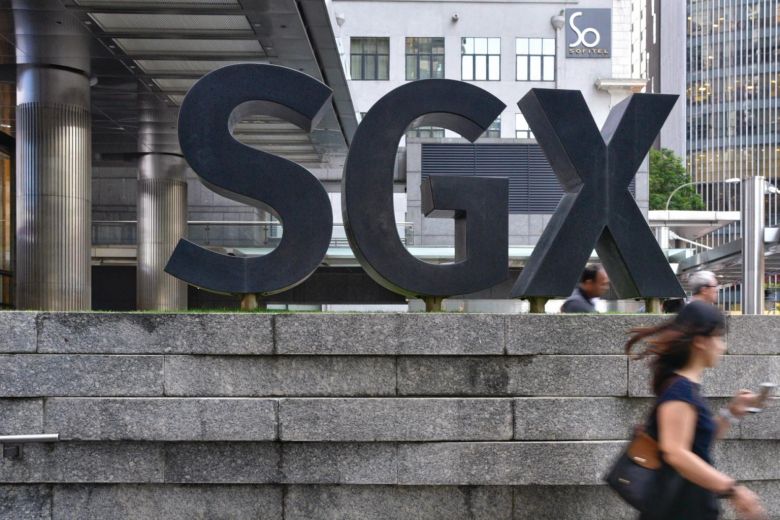
SINGAPORE – Singapore shares skidded on Thursday along with markets in Asia after an inversion of the US yield curve during Wednesday’s (Aug 14) session on Wall Street stoked recession fears, already heightened by dismal economic data from China, Germany and the eurozone.
Singapore’s Straits Times Index (STI) was trading at 3,100.36, down 47.24 points or 1.5 per cent, as at 1.05pm on Thursday (Aug 15).


Elsewhere in the Asia-Pacific, shares in Australia, China, Hong Kong, Japan and Malaysia dropped, but South Korea bucked the trend adding 0.7 per cent.
“Market sentiment turned extremely bearish last night as relief-rebound faded and the inversion of the US 10-year and two-year treasury yield curve catalysed a new round of selloff as it was perceived to be a fairly reliable indicator for an upcoming economic recession,” CMC Markets’ analyst Margaret Yang said.
On Wednesday, the 10-year Treasury bond yield dipped as much as 1.9 basis points below the two-year rate as investors rushed to longer-term safe assets. Usually, longer-term bonds give higher yields than shorter-term ones so when that equation reverses itself, economists call it an “inverted yield curve” and see it as an early-warning recession indicator.
Coming on the back of an intensifying US-China trade war that shows no signs of resolution, the flight to longer-term bonds thus signalled the growing fears of a global recession. Those fears were heightened on Wednesday after economic data from China and Germany revealed the extent of the damage the trade war is causing.
VM Markets managing partner Stephen Innes feels traders “are a bit shell-shocked by the extent of the carnage overnight and are not sure what to do with themselves today. However, trade volumes speak louder than words and those volumes are screaming Bear”.
Shortly after the afternoon session commenced, volume on the Singapore bourse clocked in at 676.41 million securities traded and a total turnover of $776.10 million. Both are on track to beat their respective seven-month daily averages.
Across the market, decliners trumped advancers 274 to 103. The bluechip index had 20 of the 30 counters in trading in the red.
Yangzijiang Shipbuilding, which resumed trading on Thursday morning after being halted last Thursday, plummeted 17 Singapore cents or 16.4 per cent lower at 87 cents with 87.7 million shares traded, the most active on the Singapore bourse.
Traders have said that the shipbuilder’s stock is oversold but were not surprised that investors have yet to “bottom fish” stocks, which are now trading at a two-and-a-half year low.
Financials were the other main laggards dragging the benchmark lower. DBS Group Holdings dropped $0.46 or 1.8 per cent to $24.53; OCBC Bank fell $0.47 or 4.2 per cent to $10.63, while United Overseas Bank (UOB) was trading at $25.00, down S$0.90 or 3.5 per cent.
That said, both OCBC Bank and UOB traded ex-dividend on Thursday.
Singtel shares stopped a two-day slide since releasing earnings, adding $0.04 or 1.3 per cent to $3.20. The telco’s shares had fell 4 per cent across the two session after it posted a 35 per cent fall in net profit for Q1.