
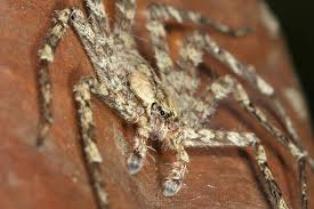


MEXICO: Researchers from the University of California, Berkeley, the University of Louisville and the Smithsonian Tropical Research Institute have found that some spiders in the tropical/subtropical genus Selenops leap from treetops and steer through the air to land on neighboring tree trunks — much like a BASE jumper steering his or her way down a cliff.
Selenops is the first genus of spider found to display this behavior, which is evidently does in order to find food and avoid predators. Some insects, like canopy ants, have also been observed doing this.
For their research, the scientists collected 59 Selenops spiders from tree trunks in Peru and Panama. Then the researchers dropped the spiders one by one — always from a height of between 65 and 80 feet, and always within about five feet of a nearby tree trunk — and observed what happened.
An overwhelming majority of these spiders — 55 out of 59, or about 93 percent — made what the researchers call a “direct” descent toward the tree trunk, meaning they glided toward the trunk in what appeared to be a controlled, deliberate manner and landed successfully on it.
What’s interesting, according to the findings, is that these spiders “never attached draglines to the specimen vial during the initial drop, nor was silk ever seen during descent.” In other words, the spiders were in free fall — but could still control the direction of their descent, apparently by moving and twitching their legs in midair. (The researchers note that “each spider was tested only once, as it was not possible to recover individuals post-descent” — which, yeah, if someone dropped us from 65 feet off the ground, we wouldn’t stick around to let them do it a second time, either.)

Karachi Port sets 138-year cargo handling record
KARACHI: Pakistan's maritime sector has achieved a major milestone as Karachi Port set a new record in its 138-year history...


