Customs Today
  • Home
  • Islamabad
  • Karachi
  • Lahore
  • National
  • Transfers and Postings
  • Chambers & Associations
  • Business
No Result
View All Result
Customs Today
  • Home
  • Islamabad
  • Karachi
  • Lahore
  • National
  • Transfers and Postings
  • Chambers & Associations
  • Business
No Result
View All Result
Customs Today
No Result
View All Result
Home International Customs South Africa

South Africa tumbles into recession as manufacturing, trade slump

byCT Report
07/06/2017
in South Africa
Share on FacebookShare on Twitter

CAPE TOWN: Gross domestic product contracted 0.7% for the first quarter of 2017, indicating that the country has entered into a technical recession, according to deputy director general of Economic Statistics at Statistics South Africa (Stats SA) Joe de Beer.

The latest GDP data was released by Stats SA on Tuesday.

You might also like

lamic banking assets reach Rs14.47 trillion, sector share rises to 23%

07/03/2026
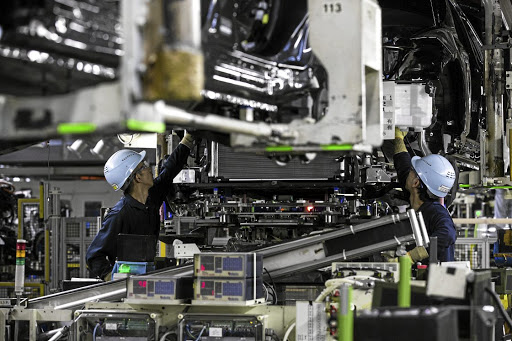
Toyota Motor Corp. employees work on the Crown vehicle production line at the company's Motomachi plant in Toyota City, Aichi, Japan, on Thursday, July 26, 2018. Toyota may stop importing some models into the U.S. if President Donald Trump raises vehicle tariffs, while other cars and trucks in showrooms will get more expensive, according to the automaker’s North American chief. Photographer: Shiho Fukada/Bloomberg

Toyota SA to invest over R4 billion in car assembly and parts

05/02/2020

The contraction follows the GDP decline of 0.3% in the fourth quarter of 2016. In 2016, the economy grew only 0.3% for the year.

Compared to the previous year, GDP growth came to 1%. “Over the last four years there were instances of negative economic growth prior to the last two quarters,” said De Beer.

The main contributors to the contraction were the trade and manufacturing industries. Trade declined 5.9% and manufacturing contracted 3.7%.

The agriculture and mining industries were the only sectors which made positive contributions. Agriculture increased growth by 22.2% on the back of the drought recovery, and mining grew by 12.8%.

However, expenditure on GDP contracted by 0.8% in the first quarter.

Household consumption declined 2.3%, with spend of food and non-alcoholic beverages, clothing and footware and transport the major contributors to negative growth.

“We saw a clear link between household consumption expenditure and a decline in trade industries [growth],” said de Beer. “We can link this to the household sector not buying as much.”

Gross fixed capital formation grew by 1%, mainly due to machinery and equipment which grew by 7.9%.

Net exports contributed negatively to growth and expenditure on GDP, while goods and services contributed negatively to growth in exports. Exports of mineral products and vehicles and transport equipment were largely responsible for the decrease in goods, according to Stats SA.

Imports, which increased 3.2%, were driven by imports of mineral products.

Government consumption expenditure contracted 1%.

Recently the World Bank projected low growth for the following two years. The World Bank expects growth of 0.6% for 2017, 1.1% for 2018 and 2% for 2019. The projections for 2017 and 2018 are 0.5 and 0.7 percentage points less respectively than its January 2017 figures.

Related Stories

lamic banking assets reach Rs14.47 trillion, sector share rises to 23%

byCT Report
07/03/2026

KARACHI: Pakistan’s Islamic banking sector expanded during 2025, increasing its share in the country’s financial system with assets reaching nearly...

Toyota Motor Corp. employees work on the Crown vehicle production line at the company's Motomachi plant in Toyota City, Aichi, Japan, on Thursday, July 26, 2018. Toyota may stop importing some models into the U.S. if President Donald Trump raises vehicle tariffs, while other cars and trucks in showrooms will get more expensive, according to the automaker’s North American chief. Photographer: Shiho Fukada/Bloomberg

Toyota SA to invest over R4 billion in car assembly and parts

byadmin
05/02/2020

Toyota SA Motors (TSAM) has announced a R4.28bn investment in local vehicle assembly and parts supply. Speaking at the company’s...

Toyota Motor Corp. employees work on the Crown vehicle production line at the company's Motomachi plant in Toyota City, Aichi, Japan, on Thursday, July 26, 2018. Toyota may stop importing some models into the U.S. if President Donald Trump raises vehicle tariffs, while other cars and trucks in showrooms will get more expensive, according to the automaker’s North American chief. Photographer: Shiho Fukada/Bloomberg

Toyota SA to invest over R4 billion in car assembly and parts

byadmin
03/02/2020

Toyota SA Motors (TSAM) has announced a R4.28bn investment in local vehicle assembly and parts supply. Speaking at the company’s...

Massmart warns of almost R1.4bn loss as SA consumers struggle

byadmin
30/01/2020

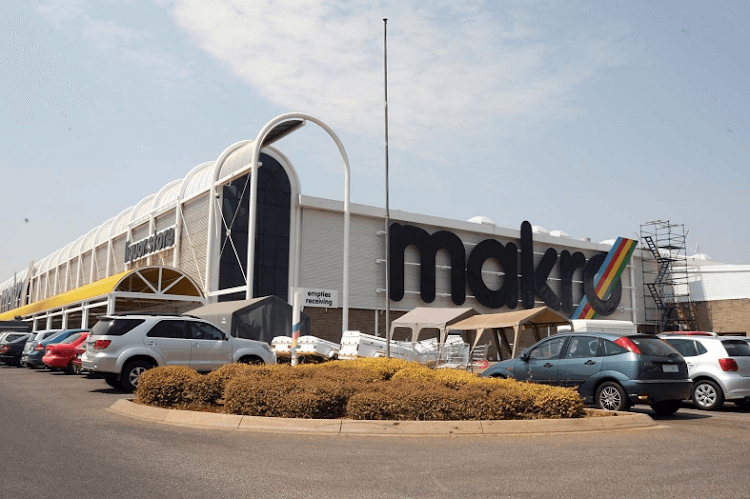
Walmart-owned retailer Massmart, whose brands include Makro and Game, warned on Thursday it had swung into a loss in its...

Next Post

Italian police bust migrant trafficking ring in Sicily

  • Terms and Conditions
  • Disclaimer

© 2011 Customs Today -World's first newspaper on customs. Customs Today.

No Result
View All Result
  • Transfers and Postings
  • Latest News
  • Karachi
  • Islamabad
  • Lahore
  • National
  • Chambers & Associations
  • Business
  • About Us

© 2011 Customs Today -World's first newspaper on customs. Customs Today.