Customs Today
  • Home
  • Islamabad
  • Karachi
  • Lahore
  • National
  • Transfers and Postings
  • Chambers & Associations
  • Business
No Result
View All Result
Customs Today
  • Home
  • Islamabad
  • Karachi
  • Lahore
  • National
  • Transfers and Postings
  • Chambers & Associations
  • Business
No Result
View All Result
Customs Today
No Result
View All Result
Home International Customs South Africa

South Africa’s personal income tax

byCT Report
11/01/2018
in South Africa
Share on FacebookShare on Twitter

CAPE TWON: National Treasury and SARS’ 10th annual edition of the tax statistics for South Africa in December, Des Kruger and Wesley Grimm of law firm Webber Wentzel have provided an analysis of the data and what it will mean for Income Tax in 2018. The document provides data on the key trends in tax revenue collections and highlights the role the tax system plays in contributing to South Africa’s fiscal health and socio-economic development, specifically for the 2013 to 2016 tax years.

One of the biggest concerns in 2016/2017 came from Personal income tax (PIT), which grew 9.4% for the 2016/2017 fiscal year a noticeably slower rate than in previous years. At over 37%, personal income tax remains the largest contributor to fiscal revenue and often has a direct impact on the economy, as increased individual tax rates may act as a disincentive for economic activity, savings and investment, SARS said.


You might also like

lamic banking assets reach Rs14.47 trillion, sector share rises to 23%

07/03/2026
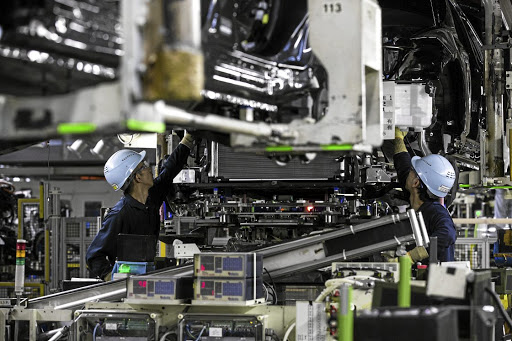
Toyota Motor Corp. employees work on the Crown vehicle production line at the company's Motomachi plant in Toyota City, Aichi, Japan, on Thursday, July 26, 2018. Toyota may stop importing some models into the U.S. if President Donald Trump raises vehicle tariffs, while other cars and trucks in showrooms will get more expensive, according to the automaker’s North American chief. Photographer: Shiho Fukada/Bloomberg

Toyota SA to invest over R4 billion in car assembly and parts

05/02/2020

In focusing on personal income tax, in March 2017, there were 20 million individuals registered for income tax, a 4.7% increase from March 2016. The increase is attributed to the requirement that employers must register all employees as taxpayers, regardless of their tax liability, Weber Wentzel said. Bearing in mind that an individual earning less than R350,000 a year from a single employer, with no other sources of income and no deductions need not submit a tax return, only 6,367,627 individuals were required to submit tax returns for the 2016 tax year. Of this number, 4,800,344 returns were submitted and assessed. Those taxpayers who submitted returns had an aggregate taxable income of over R1.4 trillion and a related tax liability just short of R297 billion, with an average tax liability of R61,862 per individual. Assuming the same R61,862 average tax liability per individual, the implication of 2.6 million individuals not submitting returns is that a large potential tax liability may still be outstanding,” Webber Wentzel said. While the number of outstanding returns does not necessarily represent tax that is due, as PAYE and provisional tax may have been paid in respect of these returns, as these outstandin

returns are processed there will no doubt be additional tax that will be payable,” it said.   This was not the case and the “top” personal income tax bracket did not produce as much revenue as expected, due largely to job losses in managerial ranks, as well as fewer bonuses and reduced increases in salaries. They also noted a slippage in compliance among taxpayers.”

Related Stories

lamic banking assets reach Rs14.47 trillion, sector share rises to 23%

byCT Report
07/03/2026

KARACHI: Pakistan’s Islamic banking sector expanded during 2025, increasing its share in the country’s financial system with assets reaching nearly...

Toyota Motor Corp. employees work on the Crown vehicle production line at the company's Motomachi plant in Toyota City, Aichi, Japan, on Thursday, July 26, 2018. Toyota may stop importing some models into the U.S. if President Donald Trump raises vehicle tariffs, while other cars and trucks in showrooms will get more expensive, according to the automaker’s North American chief. Photographer: Shiho Fukada/Bloomberg

Toyota SA to invest over R4 billion in car assembly and parts

byadmin
05/02/2020

Toyota SA Motors (TSAM) has announced a R4.28bn investment in local vehicle assembly and parts supply. Speaking at the company’s...

Toyota Motor Corp. employees work on the Crown vehicle production line at the company's Motomachi plant in Toyota City, Aichi, Japan, on Thursday, July 26, 2018. Toyota may stop importing some models into the U.S. if President Donald Trump raises vehicle tariffs, while other cars and trucks in showrooms will get more expensive, according to the automaker’s North American chief. Photographer: Shiho Fukada/Bloomberg

Toyota SA to invest over R4 billion in car assembly and parts

byadmin
03/02/2020

Toyota SA Motors (TSAM) has announced a R4.28bn investment in local vehicle assembly and parts supply. Speaking at the company’s...

Massmart warns of almost R1.4bn loss as SA consumers struggle

byadmin
30/01/2020

Walmart-owned retailer Massmart, whose brands include Makro and Game, warned on Thursday it had swung into a loss in its...

Next Post

Saudi social security program pumps $560m into citizens accounts

  • Terms and Conditions
  • Disclaimer

© 2011 Customs Today -World's first newspaper on customs. Customs Today.

No Result
View All Result
  • Transfers and Postings
  • Latest News
  • Karachi
  • Islamabad
  • Lahore
  • National
  • Chambers & Associations
  • Business
  • About Us

© 2011 Customs Today -World's first newspaper on customs. Customs Today.