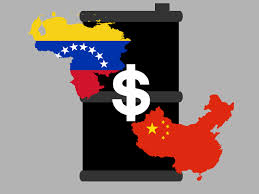
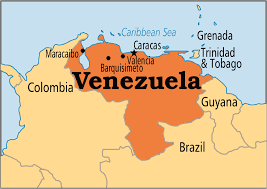
CARACAS: Latin and South America are intrinsically dependent upon commodity exports. Chinese demand for raw materials has propped up the region’s economies since the early 2000’s. Yet, the slowdown of the Asian giant, combined with plunging oil prices, has prompted a sharp decline in commodity prices.
China’s recent devaluation of the Yuan will further accelerate a currency war that was already taking place in the region, adding volatility and risk to South American economies.
Latin American economies have fallen into the extractive model trap, fueling their addiction to the exorbitant revenues commodity exports offer. With a seemingly endless Asian appetite for raw materials, nations in the region have turned their attention to high extractive industry revenues.
Take the case of Brazil, for instance, which went from $2 billion annual trade with China to over $80 billion by 2013. For over a decade, commodity-rich nations experienced an unprecedented inflow of hard currency, propelled by positive trade balances fueled by the ever-growing value of raw material exports to Asia.
As a side effect, South American currencies have appreciated, and after a decade of easy extractive revenue, profit margins have begun to shrink due to increased production costs. Strengthened local currencies have begun to undermine the export-based economic model, shrinking the trade balance and decreasing competitive advantage.
Some 98% of Venezuela’s exported value depends on oil and mining derivates. For Colombia, the situation is no better: 79% of its overall exports consist of raw materials including oil, minerals and coffee. For Peru and Argentina, 70% of outgoing trade includes oil, minerals and grains, while for Chile, copper derivates make up over 63%. Brazil still relies on commodities, with over 52% of its outbound shipments filled with iron ore, agricultural products, and hydrocarbon derivates.
Starting in 2011, almost every commodity has fallen sharply, prompting a serious commercial problem for these less-competitive economies. Since then, oil has plunged from $112 to $48 per barrel; iron ore went from $126 to $46 per metric ton; copper fell from $3.5 to $2.2 per pound, and gold has dropped from $1,900 to $1,000 per ounce.
With their trade balances compromised, regional economies have finally come to realize the unavoidable end of the extractive model, but were somehow late to maneuver and steer away from a foreseeable collision of interests.
In order to recover some of its competitive advantage and mitigate the impact of falling commodity prices, most of Latin America’s economies have devalued their currencies and implemented financial controls to reduce the hemorrhage of hard currency out of their banking system.
Additionally, amid the fall in commodity demand, Chinese authorities have decided to devalue the Yuan, making trade vis-à-vis China even less profitable.
Concurrent devaluation of regional South American currencies, coupled with the depreciation of the Yuan, will almost inevitably force a larger currency debasement race amongst neighboring economies, ultimately harming local trade.
Over the last year, Brazil’s Real has depreciated some 30%, Peru’s Sol has lost 7% and Chile’s Peso has fallen by 24%. The Colombian Peso has been devalued by close to 30% and the Argentine Peso has almost been cut in half, at 40% devaluation and counting.
Striving to regain some competitiveness out of currency devaluation, Brazil and Argentina – main MERCOSUR partners – have turned against each other, damaging trade and putting the commercial bloc under serious strain.
As neighboring economies look at their own ways to buffer against plummeting commodity prices and a depreciated Yuan, common regional interests will begin to suffer. Regional solidarity in South America has worked as prosperity lubricated the gears of trade, but under the stress of a deepening economic crisis, cooperation is likely to be displaced by competition for the time being.
As the main integration bloc in the region, MERCOSUR will need to re-evaluate institutional mechanics and the customs regulations of its member states, looking to add increased flexibility to its framework in order to stay functional and accommodate increasing currency misbalances.
The possibility of a MERCOSUR-EU trade deal will also pose a great dilemma to member states, which are less and less willing to put the collective good before individual gains. Because of this, analysts can expect the bloc to undergo an internal crisis until Argentina, Brazil, and other regional states resolve their idiosyncratic trade conditions.

Vietnam bumps Thailand down to third place in survey of interest among Japanese businesses
HANOI: Interest in Vietnam among Japanese companies continues to grow, boosting the Southeast Asian country to the second spot, right...